In 2026, dental practices are facing unprecedented competition and rising patient expectations. With technology evolving rapidly, the right tools can be the difference between thriving and falling behind.
This guide uncovers the top 7 best dental practice software options for 2026. Discover how the right solution can boost your efficiency, profitability, and patient satisfaction in an increasingly digital world.
Explore expert insights, core features, pricing, pros and cons, and ideal use cases for each platform. Ready to streamline your workflow and enhance your patient experience? Dive into our in-depth reviews and find your perfect fit.
Why Dental Practice Software Is Essential in 2026
In 2026, dental practices are navigating a rapidly changing landscape shaped by new regulations, stricter patient data security standards, and ongoing digital transformation. Staying ahead means adapting to these shifts, and the best dental practice software has become indispensable for any modern clinic.
Dental practices face a unique set of challenges today. Administrative overload can slow down front office operations, while billing complexities create headaches for both staff and patients. Retaining loyal patients is tougher than ever, as competition grows and expectations rise. The best dental practice software addresses these issues by automating time-consuming tasks and allowing teams to focus on patient care.
Here are some common pain points:
- Managing appointments and reducing no-shows
- Handling insurance claims and billing
- Ensuring regulatory compliance and data protection
- Maintaining consistent patient communication
With the right technology, these challenges become manageable. The best dental practice software enables automated scheduling, billing, and reminders, freeing up staff time and reducing errors. It also streamlines patient communication, offering features like email and SMS updates that keep everyone in the loop. For a deeper look at how these systems work and what to expect, check out this practice management software guide.
Patient expectations have evolved, too. People now demand seamless online booking, easy-to-complete digital forms, and real-time updates about their appointments. The best dental practice software delivers on all fronts, enhancing the patient experience while making check-ins and follow-ups more efficient. Advanced encryption and strict access controls ensure HIPAA compliance and protect sensitive information.
Integration is another major advantage. Many platforms connect with teledentistry tools and digital imaging, creating a comprehensive care ecosystem. For example, one group practice adopted a new platform and saw a measurable jump in revenue and patient retention within a year. According to the ADA, 70% of practices reported increased efficiency after implementing practice management software in 2025.
The bottom line? Adopting the best dental practice software is no longer optional. It is the cornerstone of a successful, secure, and patient-focused dental practice in 2026.
How to Choose the Best Dental Practice Software
Choosing the best dental practice software is a crucial step for any modern dental office. With the right solution, you can streamline daily operations, improve patient care, and gain a competitive edge. But with so many choices on the market, how do you make the right decision for your unique needs?
Assess Your Practice’s Unique Needs
Start by considering your practice type. Are you a solo provider, part of a group, or managing multiple locations? Each scenario has different requirements. For instance, multi-location practices might need centralized scheduling and robust reporting, while a specialty clinic could prioritize imaging and charting flexibility.
List out the workflows that matter most to you. Essential features for the best dental practice software often include:
- Appointment scheduling and reminders
- Billing and insurance claim management
- Clinical charting and digital imaging
- Patient communication tools
- Analytics and reporting
- Integration with third-party apps or devices
Deployment Models: Cloud vs. On-Premise
Next, decide how you want your software delivered. Cloud-based solutions offer remote access, automatic updates, and disaster recovery, making them ideal for practices seeking flexibility. On-premise systems, meanwhile, may provide more control over data and support complex setups, but require in-house IT support and infrastructure.
Scalability is another key consideration. If your practice is growing or planning to add services, choose a platform that can adapt. The best dental practice software should also offer customization options for workflows, reports, and user roles.
Ease of Use, Training, and Vendor Support
A user-friendly interface reduces training time and helps your team adapt quickly. Look for intuitive dashboards, clear navigation, and helpful onboarding resources. Vendor support is crucial too. Check if the provider offers ongoing updates, responsive customer service, and an active user community.
Pricing models vary. Subscription plans, per-user licenses, and tiered feature sets are common. Be sure to compare total costs, including any setup fees or add-on charges.
Compare and Decide: Use a Decision Matrix
To simplify your choice, create a comparison table. Score each option on core features, cost, support, and scalability. Here’s an example:
| Feature | Software A | Software B | Software C |
|---|---|---|---|
| Scheduling | Yes | Yes | Yes |
| Billing | Yes | Yes | No |
| Imaging | No | Yes | Yes |
| Cloud-based | Yes | No | Yes |
| Cost per month | $249 | $179 | $350 |
| Support quality | High | Medium | High |
For more tips on how to evaluate and compare your options, check out Comprehensive dental software reviews for unbiased insights.
Taking the time to match your needs with the best dental practice software will save you headaches down the road and help your practice thrive.
Top 7 Best Dental Practice Software Solutions for 2026
Choosing the best dental practice software in 2026 is crucial for staying competitive and meeting rising patient expectations. Each solution below offers unique strengths, features, and ideal use cases. Let’s break down what sets the top contenders apart so you can find the perfect fit for your practice.
Smart Molars
Smart Molars stands out as a trusted, independent platform dedicated to guiding dental professionals through the maze of dental software options. Unlike direct software providers, Smart Molars offers in-depth, unbiased reviews across the entire spectrum of the best dental practice software.
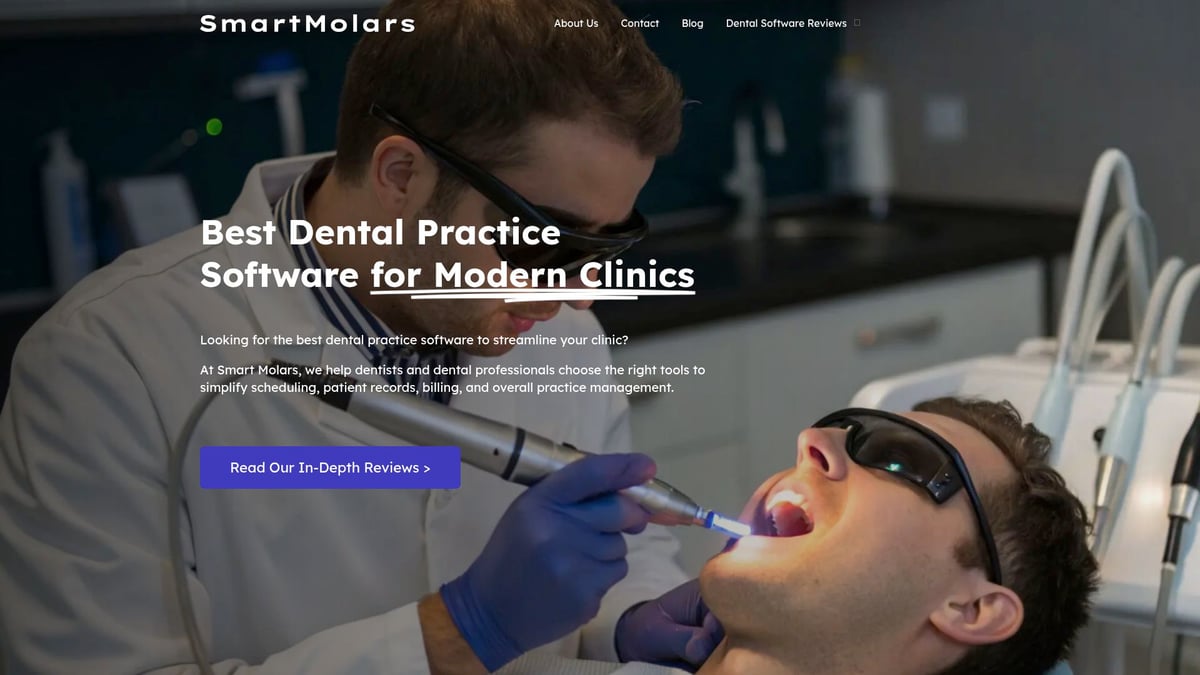
The platform’s core features include comprehensive reviews, side-by-side software comparisons, expert buying guides, and real-world user feedback. You’ll also find detailed case studies that help clarify how each product performs in the real world.
Smart Molars saves you countless hours of research. It brings together industry data, user experiences, and expert analysis under one digital roof. The platform covers all major categories, from practice management and billing to imaging and patient engagement software.
This resource is perfect for dentists, office managers, consultants, and staff who want clarity before making technology investments. The pros? It’s free, always up-to-date, impartial, and endorsed by dental industry professionals. The only real drawback is that it serves as a decision-support tool, not a direct software provider.
If you’re evaluating several contenders for the best dental practice software, Smart Molars is an invaluable starting point. It’s ideal for practices looking to make well-informed, unbiased choices about their next software upgrade.
Open Dental
Open Dental is a leading choice for practices that value flexibility and cost efficiency in the search for the best dental practice software. With its open-source model and monthly support fees (around $179/month per location), Open Dental gives you control over your software environment.
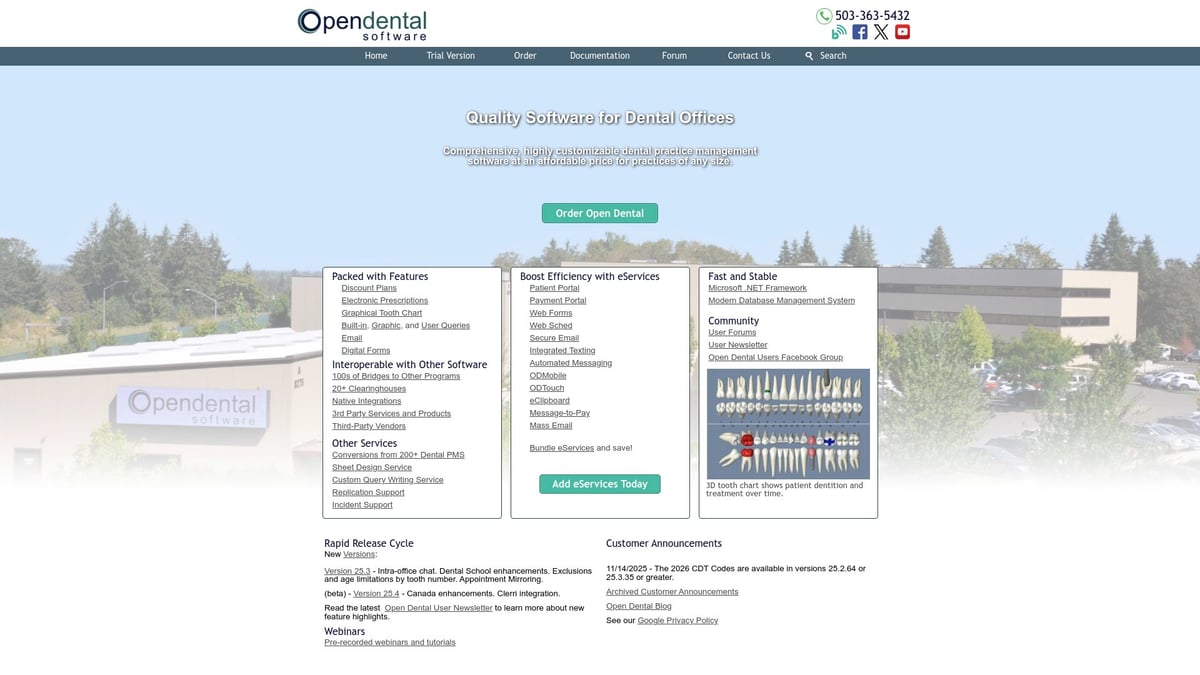
The platform’s core features include appointment scheduling, billing, charting, robust reporting, imaging integration, and customizable modules. Its open-source nature means practices with IT resources can tailor the system to fit unique workflows.
Open Dental’s benefits are hard to ignore. It offers extensive third-party integrations and transparent pricing, making it especially attractive for growing or multi-location practices. Regular updates and a strong user community provide ongoing support and knowledge sharing.
However, some practices may find the interface less modern compared to newer competitors, and advanced customizations require technical know-how. Still, for those with IT resources or specific workflow needs, Open Dental is a highly scalable and customizable solution.
Want to dive deeper? Check out this Open Dental software overview for a comprehensive analysis of its features and advantages, helping you decide if it’s the best dental practice software for your needs.
Dentrix Ascend
Dentrix Ascend is a cloud-based powerhouse designed for practices seeking the best dental practice software with easy scalability and minimal IT headaches. Subscription pricing starts around $249/month, with costs varying by practice size.
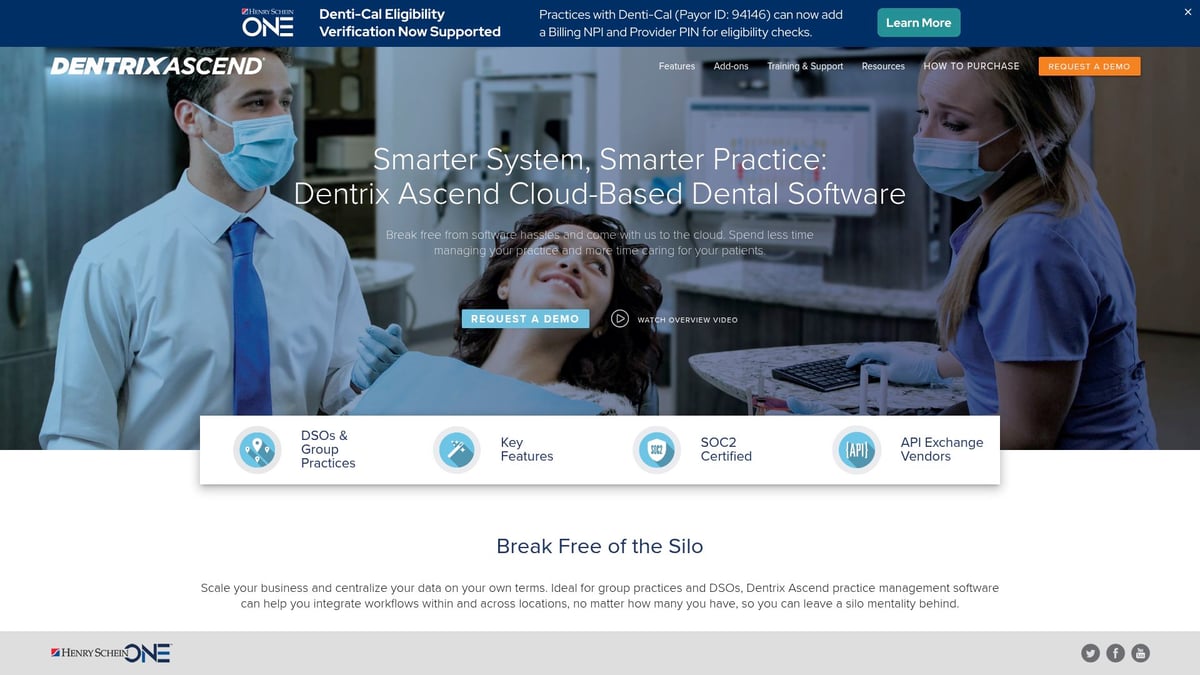
Key features include cloud-based management, automated appointment reminders, e-prescriptions, digital imaging, and a robust analytics dashboard. Dentrix Ascend makes it simple to manage multiple locations, and its intuitive interface is accessible from any device.
One of the standout benefits is how the platform streamlines operations across sites. Seamless updates and strong security protocols keep your data safe, while customer support is consistently rated as excellent.
Dentrix Ascend is a strong fit for practices prioritizing accessibility and scalability, especially those with plans for growth or multiple offices. The main drawbacks are the higher cost for small practices and limited offline functionality.
If your practice is evolving and you need a solution that grows with you, Dentrix Ascend is among the best dental practice software options to consider for 2026.
Curve Dental
Curve Dental delivers a fully cloud-based, all-in-one platform for dental practices ready to leave legacy systems behind. Subscription plans start at $350/month per provider, reflecting its premium feature set.
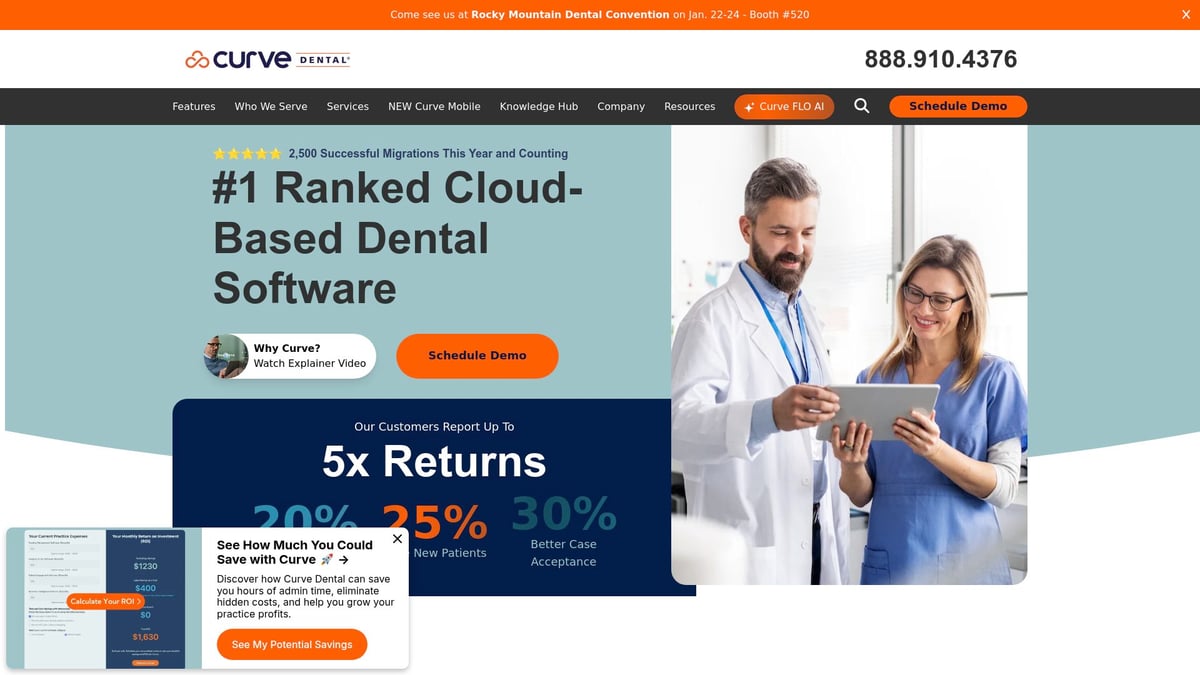
With Curve Dental, you get cloud-based scheduling, charting, billing, imaging, and robust patient engagement tools. Automatic backups and mobile access ensure your data is both secure and available wherever you need it.
The platform’s attractive user interface and easy onboarding process make it a favorite for teams seeking minimal disruption during transition. Imaging capabilities are particularly strong, and frequent updates keep the software current.
Some advanced reporting features require add-ons, and the entry price is higher than some competitors. Still, Curve Dental is ideal for practices prioritizing hassle-free cloud adoption and remote access, making it one of the best dental practice software platforms for forward-thinking teams.
Eaglesoft
Eaglesoft is a perennial favorite among established practices that require the best dental practice software with deep clinical and administrative features. Its perpetual license model, combined with optional support and upgrades, offers flexibility in ownership.
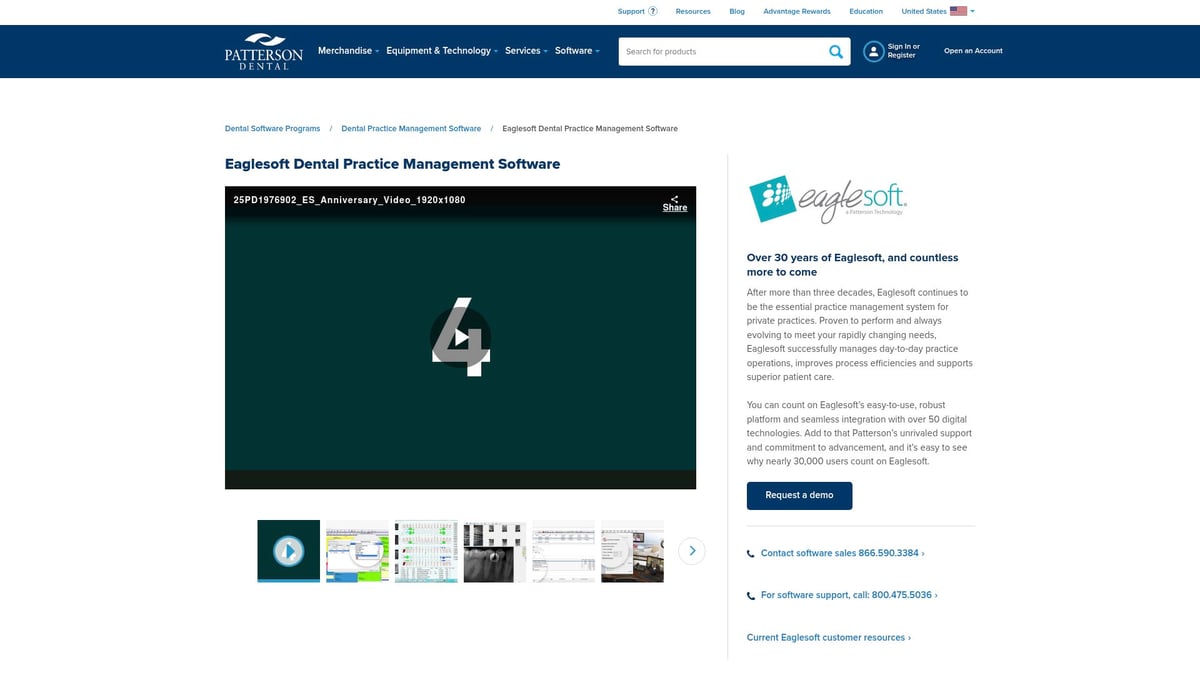
Core features include comprehensive practice management, clinical charting, imaging integration, and patient communication. Eaglesoft’s mature product design is trusted by many larger and specialty-focused dental offices.
The benefits are clear: robust clinical tools, strong imaging and charting capabilities, and reliable support from Patterson Dental. On the downside, Eaglesoft’s on-premise model requires dedicated IT infrastructure and is less flexible than cloud-first solutions.
For large or specialty practices with complex workflows, Eaglesoft remains a top-tier choice in the best dental practice software landscape, providing depth and reliability in every aspect of practice management.
CareStack
CareStack is an all-in-one, cloud-based platform that’s rapidly gaining traction among practices seeking the best dental practice software for modern, scalable operations. Pricing is based on custom quotes, tailored to the size and unique needs of each practice.
CareStack’s core features include comprehensive practice management, billing, advanced analytics, teledentistry, patient engagement, and insurance claims. Its unified platform centralizes all operations, offering strong automation tools and HIPAA-compliant security.
The platform’s built-in telehealth and analytics capabilities make it especially attractive for DSOs, multi-location practices, or those expanding their range of services. The main cons are a steeper learning curve for smaller teams and the lack of public pricing.
If you want to dig deeper into how CareStack stacks up among the best dental practice software, explore this CareStack dental software insights resource for more details.
Tab32
Tab32 rounds out our list of the best dental practice software for 2026 with its cloud-based, analytics-driven approach. Subscription pricing starts at $249/month per provider, making it accessible for many practices.
Tab32’s core features include practice management, imaging, billing, patient engagement, and real-time analytics. The platform’s customizable workflows and strong data visualization tools set it apart for data-driven practices.
Teledentistry and integrated imaging are built-in, supporting modern care delivery. Tab32’s scalable infrastructure and intuitive dashboard make onboarding straightforward, though some advanced features require higher-tier plans and additional training.
For multi-location clinics or teams prioritizing patient engagement and data-driven decisions, Tab32 is a compelling contender among the best dental practice software platforms in 2026.
Summary Comparison Table
| Software | Pricing Model | Deployment | Key Features | Best For |
|---|---|---|---|---|
| Smart Molars | Free | Web | Reviews, comparisons, guides | Decision support |
| Open Dental | $179/mo/location | On-premise | Scheduling, billing, customization | Custom workflows, IT teams |
| Dentrix Ascend | $249+/mo | Cloud | Multi-location, analytics, reminders | Growing practices |
| Curve Dental | $350+/mo/provider | Cloud | All-in-one, imaging, engagement | Cloud transition, remote |
| Eaglesoft | Varies (license) | On-premise | Clinical charting, imaging | Specialty, large practices |
| CareStack | Custom quote | Cloud | Analytics, teledentistry, insurance | DSOs, scalable operations |
| Tab32 | $249+/mo/provider | Cloud | Analytics, imaging, teledentistry | Data-driven, multi-location |
With these top contenders, selecting the best dental practice software becomes a strategic decision. Factor in your practice’s size, workflow needs, and long-term goals as you compare these leading solutions for 2026.
Key Trends in Dental Practice Software for 2026
The landscape for the best dental practice software is evolving faster than ever. In 2026, dental teams must keep up with new technology and rising patient expectations. Practices are embracing digital transformation, not just to stay competitive, but to deliver care that feels seamless and personal.
AI-Powered Automation and Smart Workflows
Artificial intelligence is no longer a buzzword, it is a cornerstone of the best dental practice software. AI-driven features now handle appointment reminders, automate billing, and follow up with patients, cutting administrative workload and reducing no-shows. Practices using AI for scheduling have seen a 15% drop in missed appointments, freeing up valuable chair time.
Teledentistry and Enhanced Patient Self-Service
Remote care is here to stay. The best dental practice software now integrates teledentistry tools, letting dentists consult with patients virtually and expand access to care. Patients expect online booking, digital forms, and mobile app portals for managing appointments. This self-service approach improves convenience and boosts patient retention.
Focus on Interoperability and Data-Driven Decisions
Connecting with imaging tools, labs, and third-party apps is now essential. Interoperability enables a single source of truth for patient data, supporting better clinical decisions. Advanced analytics and real-time dashboards help practices spot trends, measure performance, and make smarter choices. According to Dental Practice Management Software Market Trends, integration and analytics are top priorities for software buyers.
Cybersecurity, Compliance, and Cloud Adoption
Patient data security is non-negotiable. The best dental practice software invests in robust encryption, HIPAA compliance, and granular access controls to protect sensitive information. Cloud-based platforms are surging in popularity, offering flexibility, disaster recovery, and automatic updates. As the Global Dental Practice Management Software Market Growth report highlights, cloud adoption is a major driver of market expansion worldwide.
Summary Table: Key Trends in Dental Practice Software
| Trend | Impact on Practices |
|---|---|
| AI-powered automation | Reduces admin, improves efficiency |
| Teledentistry integration | Expands access, supports remote care |
| Patient self-service | Boosts satisfaction, streamlines workflow |
| Interoperability | Enhances data accuracy, clinical outcomes |
| Advanced analytics | Drives performance, supports decisions |
| Cybersecurity & compliance | Protects data, builds patient trust |
| Cloud adoption | Enables flexibility, cost savings |
In summary, staying ahead means adopting the best dental practice software that leverages these trends. Practices that embrace AI, interoperability, and secure cloud solutions will lead the way, offering care that is not just efficient, but truly patient-centered.
Frequently Asked Questions About Dental Practice Software
Choosing the best dental practice software can feel overwhelming with so many options and features in 2026. Here are answers to the most frequently asked questions to help you make an informed decision.
What are the main benefits of using dental practice software in 2026?
The best dental practice software streamlines scheduling, billing, and patient communication. It helps practices save time, reduce errors, and improve patient satisfaction. According to Dental Practice Management Software Market Analysis, practices using these solutions see better retention and profitability.
How do cloud-based and on-premise solutions differ for dental practices?
Cloud-based platforms offer remote access, automatic updates, and easier data backup. On-premise solutions require local servers and more IT management. Many practices choose cloud options for flexibility and disaster recovery.
What should practices look for when evaluating new software?
Prioritize features like appointment scheduling, billing, charting, integrations, and security. Evaluate vendor support, user training, and the ability to scale as your practice grows.
How can software improve patient experience and retention?
Modern dental software enables online booking, digital forms, and real-time appointment updates. These tools make visits smoother and encourage patients to return.
Are there affordable options for small or startup practices?
Yes, some best dental practice software solutions offer flexible pricing or open-source models. Many vendors provide tiered plans so even new practices can access essential features.
How often should dental practices update or switch software?
Review your software every few years or when your workflow changes. Regular updates ensure security and access to the latest features.
What are common pitfalls to avoid when implementing new dental software?
Avoid skipping staff training or underestimating setup time. Choose a solution that matches your practice's specific needs and always test integrations before going live.