The dental CAD/CAM landscape is changing fast, and the exocad price is set to see significant updates in 2026. Are you prepared for what’s ahead? Staying informed is crucial for dental professionals who want to make smart investment decisions.
In this guide, you’ll find a clear breakdown of current exocad price trends, what to expect in 2026, and the main factors driving these changes. We’ll also compare Exocad to other top solutions and walk you through choosing the best license for your needs. Get ready to take control of your digital dentistry investments with confidence.
Understanding Exocad: Features, Modules, and Market Position
Dental professionals are increasingly looking for clarity on Exocad price as they evaluate digital dentistry software options. Exocad stands out as a leading dental CAD platform, trusted by labs and clinics worldwide. It offers core functionalities such as dental restoration design, implant planning, and orthodontic case management. The software's intuitive workflow and flexibility have contributed to its rapid adoption, with recent industry reports suggesting Exocad holds a significant share of the dental CAD market. Unlike some competitors, Exocad is celebrated for its open architecture, enabling seamless integration with a wide range of scanners and hardware.
What is Exocad?
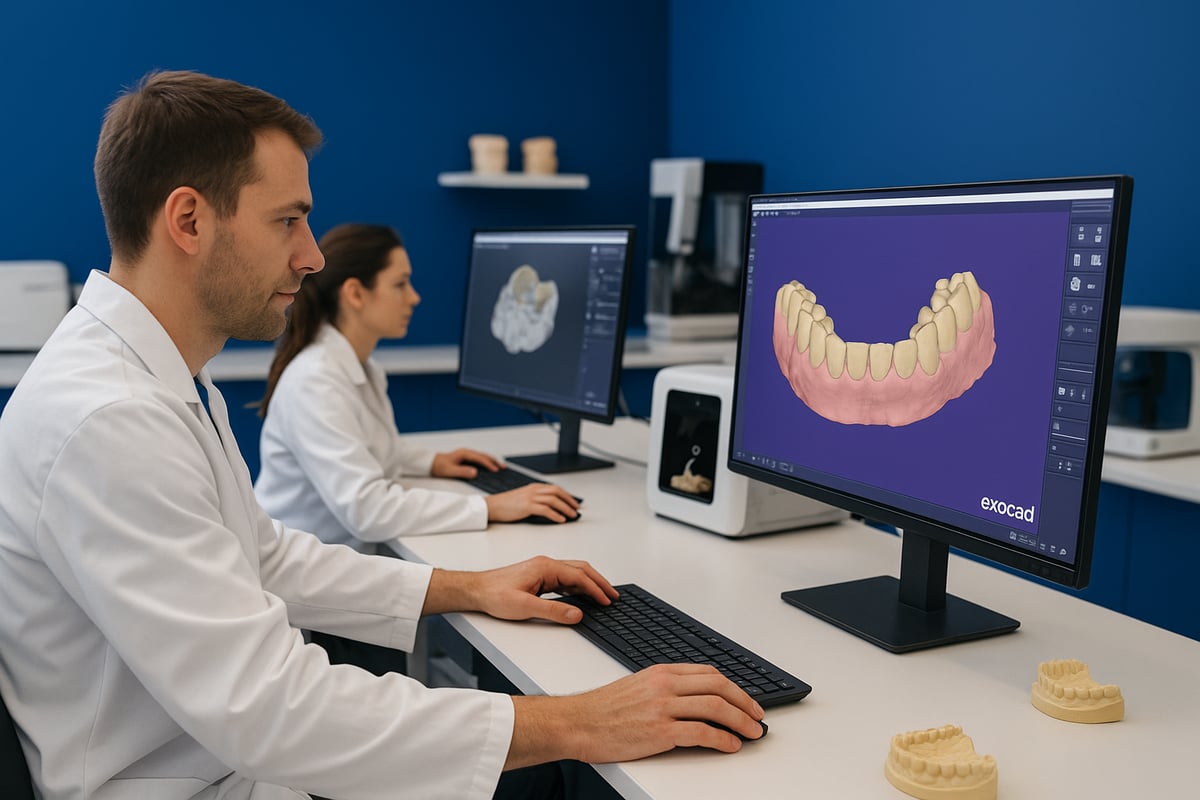
Exocad is a comprehensive dental CAD software platform designed for both dental labs and clinics. Its core features include digital design for crowns, bridges, implants, and orthodontic appliances. The software is known for its adaptability, letting users tailor workflows to their specific needs. The growing popularity of Exocad is reflected in its expanding global user base, with many practices citing its ease of use and flexible integration as key reasons for adoption. When it comes to exocad price, many find the investment justified by the software's robust capabilities and frequent updates.
Key Modules and Add-Ons
Exocad’s modular system allows users to customize their software package based on workflow needs. Main modules include DentalCAD for lab-based design, ChairsideCAD for in-clinic applications, and Exoplan for guided implant planning. Popular add-ons like Implant, Model Creator, Smile Creator, and Partial Framework provide specialized features. Modular pricing means exocad price varies depending on your chosen configuration.
| Module/Add-On | Primary Use | Typical Users |
|---|---|---|
| DentalCAD | Lab restorations | Labs |
| ChairsideCAD | In-clinic design | Clinics |
| Exoplan | Implant planning | Labs/Clinics |
| Smile Creator | Smile design | Both |
For example, a small lab may opt for DentalCAD with a few add-ons, while a large clinic might select ChairsideCAD bundled with multiple modules, affecting their total exocad price.
Exocad’s Market Position and Competitors
Exocad’s open system attracts a diverse user base, from small labs to major dental service organizations and universities. Its main competitors are 3Shape, Dental Wings, and Planmeca. Exocad is often chosen for its compatibility with third-party hardware and flexible workflows, while competitors like 3Shape may offer advanced AI features and proprietary ecosystem benefits.
Pros of Exocad:
- Open architecture, broad hardware support
- Cost-effective module selection
- Regular updates
Cons:
- Some advanced features only available as add-ons
- Learning curve for new users
Exocad also maintains strong partnerships with leading scanner manufacturers, further boosting its appeal. For an in-depth look at how Exocad stacks up against its top rival, see this Exocad vs. 3Shape: Dental CAD Software Comparison.
Current Exocad Pricing Models
Understanding exocad price starts with knowing its licensing structure. Exocad offers both perpetual licenses (one-time purchase with optional annual upgrades) and subscription models (ongoing payments covering updates and support). Regional pricing differences exist, with US, EU, and APAC markets seeing varied base costs. Typically, the base software ranges from $4,000 to $8,000, with add-ons priced individually. Annual renewal or upgrade fees apply, especially for perpetual licenses, and can influence the long-term exocad price for your practice.
Exocad Price Trends: 2024-2026 Forecast
Dental professionals are keeping a close eye on exocad price dynamics as the industry moves toward 2026. Understanding past trends, current changes, and future forecasts is essential for making informed decisions about software investments.
Historical Pricing Overview
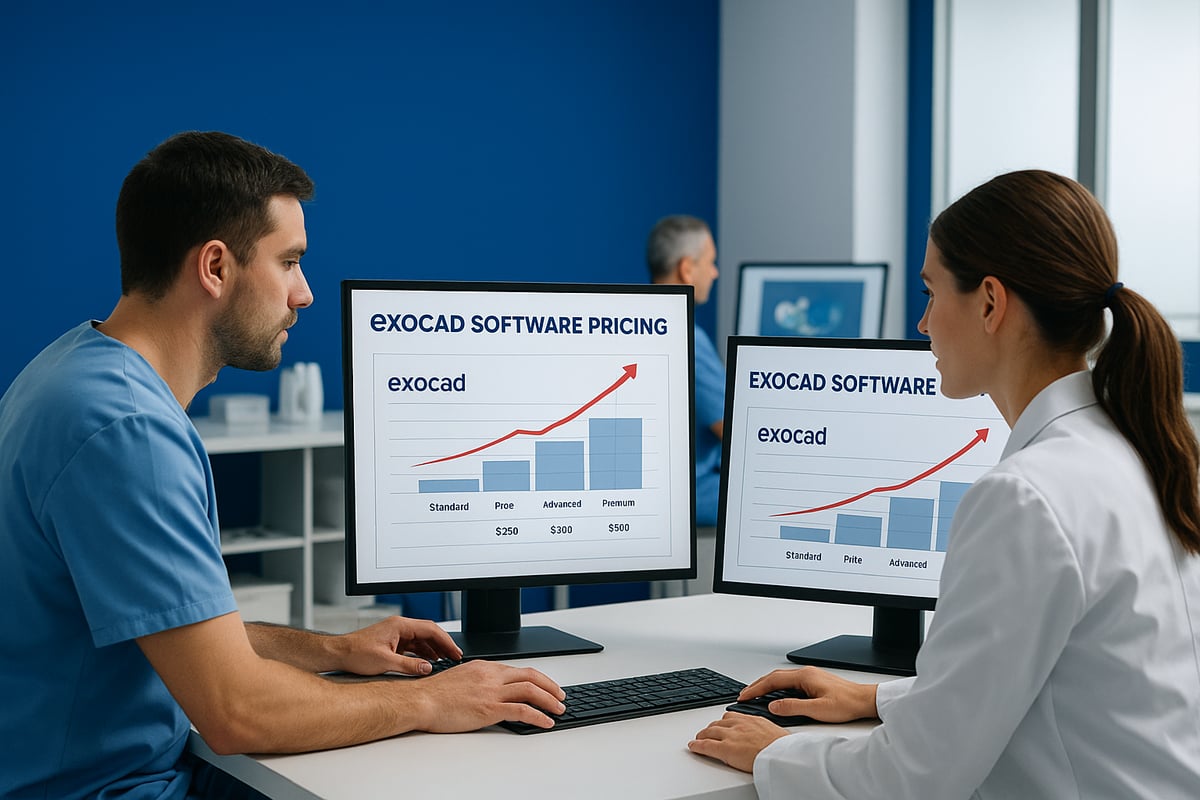
The exocad price landscape has shifted notably between 2022 and 2024. During this period, many practices noticed a gradual move from perpetual licenses to subscription-based models, resulting in a different cost structure.
Average annual increases ranged from 5% to 10%, with core modules like DentalCAD seeing incremental jumps. For example:
| Year | DentalCAD Perpetual | DentalCAD Subscription |
|---|---|---|
| 2022 | $5,600 | $2,000/year |
| 2023 | $6,000 | $2,200/year |
| 2024 | $6,400 | $2,400/year |
These changes reflect not only inflation but also growing demand for advanced features, which have influenced the exocad price trajectory.
Factors Driving Price Changes in 2026
Several key forces are expected to shape exocad price adjustments in 2026. Inflation continues to impact global software costs, while supply chain disruptions contribute to higher pricing for CAD/CAM-related technologies.
Another significant factor is the investment in research and development, as Exocad introduces new AI-driven tools and enhanced workflows. Licensing models are shifting further toward subscriptions, which can affect long-term budgeting. Additionally, compliance with regulations like the MDR in Europe is increasing development and certification costs, all of which are likely to drive exocad price changes in the coming years.
Predicted 2026 Pricing Structure
Looking ahead, exocad price estimates for 2026 suggest a continued preference for subscription models, with perpetual licenses becoming less common. The base DentalCAD license may reach $2,800 annually, while essential add-ons like Implant and Smile Creator could range from $900 to $1,200 each per year.
Bundled pricing is expected to become more attractive for multi-module users, offering potential savings for larger practices. For readers seeking to compare current and projected exocad price points with alternative dental CAD/CAM software, the Exocad alternatives and reviews page provides valuable insights and up-to-date comparisons.
Impact on Dental Practices and Labs
Rising exocad price levels mean dental practices and labs must plan software budgets more carefully. For instance, a small lab might expect annual software expenses to increase by 10% to 15% by 2026, while large DSOs could face even steeper rises due to multi-seat licensing needs.
Return on investment remains a central concern, especially when weighing the benefits of upgrading versus switching vendors. Recent industry surveys show that more than half of labs are reassessing their digital workflow investments in light of anticipated exocad price changes. Careful evaluation and proactive planning will help practices stay competitive in this evolving market.
How to Choose the Right Exocad License and Modules
Choosing the right Exocad license and modules is crucial for maximizing your investment and workflow efficiency. With exocad price set to change in the near future, making an informed decision now can pay off for years. Let’s break down how to match the right solution to your practice’s unique needs.
Assessing Your Practice’s Needs
Start by evaluating the specific requirements of your dental business. Is your practice a dental lab, a clinical office, or a hybrid setting? The exocad price you pay will depend on the type and volume of digital cases you handle.
Think about the complexity of your workflows. Are you mainly restoring single crowns or handling full-arch reconstructions? Consider your team’s expertise, as advanced modules may require more training. Integration with your current scanners, mills, and printers is also key—compatibility issues can impact both workflow and exocad price.
Make a checklist:
- Practice type (lab, clinic, chairside, hybrid)
- Case volume and complexity
- Staff CAD/CAM experience
- Hardware/software integration needs
By clarifying these points, you’ll be ready to map out the best Exocad configuration.
Step-by-Step Guide to Selecting Exocad
Selecting the right Exocad license and modules can seem daunting, but breaking it into clear steps helps ensure you get the best value for your exocad price.
- List essential digital workflows (crowns, bridges, implants, dentures).
- Map which Exocad modules and add-ons are required for those workflows.
- Decide between subscription or perpetual licensing based on your budget and long-term plans.
- Request detailed quotes from certified Exocad resellers, specifying all needed modules.
- Evaluate available support, training, and software update options—these affect the overall exocad price over time.
- Compare the total cost of ownership for 3–5 years, factoring in upgrades and renewal fees.
Following these steps gives you a clear path to a solution that fits your clinical or lab needs—and your budget.
Comparing Exocad Packages: Real-World Examples
Seeing how different practices approach their Exocad setup can make the exocad price easier to understand. Here’s a quick comparison:
| Scenario | Essential Modules | Add-Ons | Typical Exocad Price (USD) |
|---|---|---|---|
| Solo Dentist | DentalCAD, ChairsideCAD | Smile Creator | $6,000–$8,000 |
| Group Practice | DentalCAD, Exoplan, Model Creator | Implant, Partial Framework | $10,000–$14,000 |
| Start-up Lab | DentalCAD | Model Creator | $5,000–$7,000 |
| Established Lab | DentalCAD, Exoplan | Multiple add-ons | $12,000–$18,000 |
A solo dentist might choose a basic package, while a larger DSO or established lab often invests in more modules, which increases the exocad price but also boosts capability.
Tips for Negotiating and Saving on Exocad
Smart purchasing strategies can help you lower your exocad price without sacrificing features. Here are some tips:
- Time your purchase for vendor promos or end-of-quarter deals.
- Bundle essential modules to unlock discounts on the total exocad price.
- Ask about trade-in or upgrade offers for legacy software.
- Consider certified pre-owned licenses for initial savings.
Staying flexible and negotiating with resellers can make a noticeable difference in your final investment.
How Smart Molars Can Help Dental Practices Evaluate Exocad and Alternatives
Navigating the exocad price landscape can be overwhelming, especially with so many CAD/CAM options available. That’s where Smart Molars steps in as an unbiased dental software review platform.
Smart Molars offers expert guides, real-user feedback, and side-by-side comparisons to help you understand exocad price and feature differences. Their platform provides up-to-date pricing, detailed module breakdowns, and practical resources for selecting and implementing Exocad or alternative solutions.
By leveraging Smart Molars, your practice can make an informed, confident investment in dental CAD software.
Exocad vs. Competitors: Price and Value Comparison
Dental professionals looking to invest in CAD/CAM software often ask how the exocad price stacks up against major competitors. Choosing the right platform is a major decision, so a careful comparison of features and long-term value is essential. Let’s break down how Exocad compares to other industry leaders, both in cost and strategic advantages.
Leading Exocad Alternatives
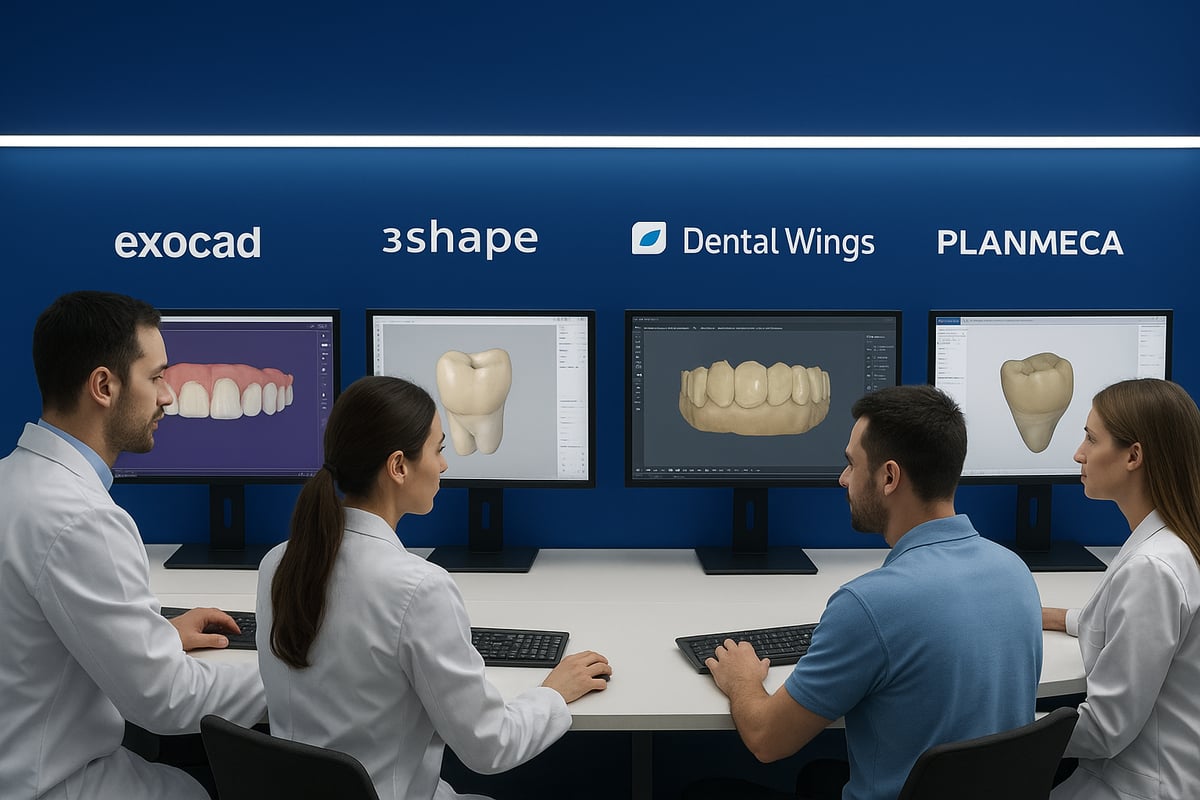
The dental CAD/CAM market is packed with strong contenders. Exocad’s main rivals include 3Shape Dental System, Dental Wings, and Planmeca Romexis. Each offers a range of tools for dental design, implant planning, and orthodontics.
3Shape is known for its advanced AI features and seamless scanner integration. Dental Wings delivers robust lab workflows, while Planmeca Romexis is favored for its all-in-one ecosystem approach.
When comparing exocad price with these alternatives, it’s important to weigh not just the cost but also how each system fits different practice sizes and specialties.
Price Comparison Table
Understanding exocad price versus its competitors means looking at both upfront and ongoing costs. Here’s a simplified price comparison:
| Software | Base Price (USD) | Modules/Add-ons | Subscription Option | Annual Fees |
|---|---|---|---|---|
| Exocad | $5,000–$7,000 | $900–$2,500 ea. | Yes | $900–$2,000 |
| 3Shape | $6,500–$9,000 | $1,200–$2,800 | Yes | $1,200–$2,400 |
| Dental Wings | $6,000–$8,500 | $1,000–$2,200 | Yes | $1,000–$2,000 |
| Planmeca | $6,000–$10,000 | $1,500–$3,000 | Yes | $1,500–$2,500 |
For a more detailed breakdown of 3Shape’s pricing and how it compares to exocad price, check the 3Shape Dental System pricing guide.
These values are typical ranges and can vary by region or reseller. Subscription models often lower the upfront exocad price, but annual renewals and add-ons can add up over time.
Feature and Workflow Comparison
Exocad stands out for its open architecture, making it compatible with a wide variety of scanners and mills. This flexibility is a big draw for labs that want to avoid being locked into proprietary systems.
Competitors like 3Shape excel in AI-powered workflows and cloud collaboration, while Planmeca offers deep integration with its own hardware. Dental Wings is praised for its reliable lab-focused features.
When considering exocad price, remember to factor in which workflows matter most to your practice. Exocad’s modular approach lets you pay only for what you need, which can be cost-effective for tailored setups.
Total Cost of Ownership: Exocad vs. Alternatives
Looking beyond the initial exocad price is crucial. Calculate the full investment, including annual renewals, training, and any hidden support fees. For a mid-sized lab, a 3-year ownership cost might look like this:
- Exocad: $5,500 base + $4,500 (renewals) + $2,500 (training/support) = $12,500
- 3Shape: $7,500 base + $5,400 (renewals) + $2,800 (training/support) = $15,700
Hidden fees can include software updates or extra charges for premium support. The exocad price advantage may grow if you already own compatible hardware, since Exocad works with many third-party devices.
User Experience and Support
User satisfaction plays a big role in the value equation. Exocad users praise its intuitive interface and active community forums. Comprehensive training options are available, both from vendors and third parties.
Competitors often offer strong onboarding, but some require users to stick with branded hardware. A case study from a mid-sized practice switching to Exocad reported improved workflow speed and reduced annual costs.
When evaluating exocad price, also consider the quality of support and the availability of local partners for hands-on help.
When Exocad is the Best Value—and When It’s Not
Exocad price delivers top value for practices seeking flexibility, modular add-ons, and hardware freedom. It’s ideal for labs and clinics that want to customize their digital ecosystem.
However, if your workflow is heavily dependent on AI, cloud sharing, or you already use a full Planmeca suite, a competitor could be a better fit.
Decision checklist:
- Do you need open hardware compatibility?
- Are modular add-ons a must-have?
- Is initial or total ownership cost more important?
- How vital are AI or cloud features?
Compare these answers to your budget and workflow needs. The right exocad price is the one that supports your growth, not just your bottom line.
Key Factors Influencing Exocad Pricing in 2026
Navigating the exocad price landscape for 2026 means looking beyond the sticker price. Dental professionals must consider several influential factors to ensure they make smart, future-ready investments. From licensing trends to integration costs, each element can shape the total cost of ownership, so understanding these drivers is crucial for budgeting and decision-making.
Licensing and Subscription Models
Licensing has shifted dramatically in recent years, and the exocad price structure is no exception. Many practices now face a choice between perpetual licenses and recurring subscriptions. Subscription models offer lower upfront costs and regular updates, but they can lead to higher long-term expenses, especially for large labs.
For smaller clinics or those just starting digital workflows, subscriptions provide flexibility and easier entry. However, established practices with stable hardware may prefer perpetual licenses to control costs. When evaluating options, consider how each model aligns with your cash flow and growth plans. Exploring Dental charting and CAD programs can also help if you want to compare alternative software license structures.
Geographic and Regulatory Differences
Where you practice can have a significant impact on exocad price. Regional pricing differences reflect currency fluctuations, local taxes, and import duties. For example, VAT in the EU or compliance costs in Asia-Pacific can add to the total investment.
Regulatory requirements such as GDPR and MDR in Europe also drive up costs, since vendors must update software to meet these standards. Staying informed about local regulations and understanding how they affect licensing or renewal fees can help you avoid surprises in your budgeting process.
Integration and Hardware Compatibility
Integration is a cornerstone of exocad price considerations. Practices must ensure their scanners, mills, and 3D printers are compatible with the latest software version. Upgrading hardware or switching to certified devices can add significant costs, especially if your current equipment is not on Exocad’s approved list.
Exocad’s open architecture is a major advantage here, offering broad compatibility with many brands. According to Exocad’s Expansion of ‘Freedom of Choice’, the software continues to enhance integration options, helping practices adapt without being locked into proprietary systems. Still, always review the certified compatibility list when budgeting for hardware and software together.
Support, Maintenance, and Training
Ongoing support and training are vital components of the total exocad price. Annual maintenance fees typically include software updates, security patches, and access to technical support. Investing in comprehensive onboarding or third-party training can accelerate adoption and maximize ROI, especially for teams new to digital workflows.
Some vendors offer bundled support and training packages, while others charge separately. Weigh the value of these services, considering both immediate needs and long-term benefits. Proper training not only reduces errors but also ensures your investment delivers lasting value as the software evolves.
Future Outlook: Innovations and Long-Term Value
The dental CAD/CAM landscape is moving fast, and Exocad is right at the forefront. Understanding how exocad price will evolve means looking beyond today’s features and focusing on what’s coming next. Let’s explore the innovations, AI-driven changes, ROI, and strategies that will shape your investment for 2026 and beyond.
Upcoming Features and Roadmap
Exocad has announced several upcoming enhancements for 2026. The focus is on smarter workflows, improved user experience, and broader clinical indications. Expect AI-driven design suggestions, deeper cloud collaboration, and expanded support for orthodontics and implantology.
Some roadmap highlights include:
- Real-time cloud syncing for multi-location labs
- Enhanced smile design tools with facial scan integration
- Broader compatibility with next-gen scanners and printers
These innovations are likely to influence exocad price, especially as bundled packages and premium features become more common. Keeping an eye on the roadmap helps you anticipate which modules may become essential for your practice.
The Role of AI and Automation in Pricing
AI is set to play a pivotal role in the next evolution of dental CAD software. Exocad is developing AI-powered features, such as automated tooth setup, predictive restoration design, and instant smile simulations. These tools promise to boost productivity and accuracy, but they may also introduce premium pricing tiers or new module costs.
For example, AI-driven smile design could be offered as a premium add-on, changing the way exocad price is structured. If you’re evaluating the value of these features, consider reviewing empirical studies like the Morphological Accuracy of CAD Software-Designed Crowns, which compare the performance of CAD software using real-world data.
Long-Term ROI and Software Lifespan
Investing in Exocad is about more than just the upfront cost. The long-term ROI depends on software lifespan, update frequency, and module flexibility. Typically, Exocad licenses remain viable for several years, with major upgrades released every 2 to 3 years.
To maximize value:
- Plan for periodic upgrade fees
- Choose modules that align with your evolving workflow
- Invest in staff training to unlock full software potential
A strategic approach ensures that your exocad price investment pays off over time, minimizing downtime and maximizing productivity.
Preparing Your Practice for 2026 and Beyond
Future-proofing your practice involves more than just budgeting for exocad price increases. Start by setting clear digital dentistry goals, such as expanding treatment offerings or improving patient experience. Stay informed on technology trends, regulatory changes, and new software releases.
Steps to prepare:
- Review your current hardware and integration needs
- Attend webinars and read industry updates
- Build flexibility into your software budget
By planning ahead, you position your practice to adapt smoothly to new features, pricing models, and patient expectations.