Dental practice management systems are evolving at lightning speed, transforming the way modern clinics operate. As we approach 2025, practices will need smarter, more integrated tools to boost efficiency, ensure compliance, and enhance patient engagement.
Adopting cutting-edge dental practice management systems means streamlined workflows, better patient experiences, and higher profitability. These solutions are no longer optional but essential for staying competitive in a fast-changing industry.
This article delivers an expert, unbiased overview of the 9 essential dental practice management systems set to define success in 2025. You’ll find a detailed review of each leading platform, from pricing and features to benefits, ideal users, and unique strengths.
What Makes a Dental Practice Management System “Essential” in 2025?
Dental practices in 2025 face a rapidly changing landscape. To keep up, clinics need dental practice management systems that are not only robust but also flexible and future-ready. Understanding what separates an essential system from the rest is the first step to making a smart investment.
Key Features and Functionality
The backbone of essential dental practice management systems in 2025 lies in their core capabilities. Practices expect:
- Cloud-based access for real-time data, whether at a single office or across multiple locations.
- Mobile compatibility for on-the-go updates and patient engagement.
- Integrated modules that cover scheduling, billing, clinical charting, imaging, and communications.
- Automation such as reminders, e-prescriptions, and digital forms to cut manual work.
- Advanced analytics to guide business decisions.
- Strong security and compliance with HIPAA and GDPR.
- Customization for specialties like orthodontics or pediatrics.
- Built-in telehealth tools for remote care.
A system that ticks these boxes is set to meet the evolving demands of dental practice management systems.
Market Trends and Innovations
Dental practice management systems are evolving quickly to match new market realities. In 2025, AI-driven automation will be a game-changer, optimizing appointments and streamlining patient follow-up. Practices increasingly want seamless integration with third-party apps for everything from payments to marketing.
Patient self-service portals and mobile-first experiences are no longer optional—they’re expected. Subscription-based pricing and flexible deployment models are becoming the industry norm. According to a 2023 survey, 68% of clinics aim to upgrade their dental practice management systems by 2025, highlighting the pace of change.
Challenges in System Selection
With so many dental practice management systems on the market, finding the right fit can be daunting. Practices must sift through a flood of vendor claims and marketing messages.
Key challenges include:
- Weighing cost against needed features.
- Ensuring staff can adapt with minimal disruption.
- Evaluating vendor support, training, and long-term reliability.
- Managing the transition from legacy software, which often takes 2 to 4 weeks.
Choosing the right dental practice management systems means balancing features, price, and ease of adoption.
The Role of Independent Reviews and Expert Guidance
Making an informed decision about dental practice management systems requires more than glossy brochures. Unbiased, expert-driven evaluations help practices see past the hype. Real user feedback and side-by-side comparisons empower clinics to make smarter choices.
Industry studies reveal that 79% of dental practices consult online reviews before choosing software. Trusted resources like the Dental Practice Management Software Guide provide up-to-date, impartial insights. This guidance saves time, reduces risk, and ensures practices invest in systems that truly fit their needs.
9 Essential Dental Practice Management Systems for 2025
Modern dental clinics rely on robust dental practice management systems to streamline their workflow, enhance patient care, and boost profitability. As technology evolves, choosing the right software becomes a critical decision for every dental practice. Below, we offer expert, unbiased reviews of the nine dental practice management systems set to lead the industry in 2025.
Dentrix Ascend
Dentrix Ascend is a cloud-based dental practice management system designed for clinics of all sizes, especially those seeking scalability. Its subscription-based pricing starts at $249 per month per provider, making it accessible for growing practices.
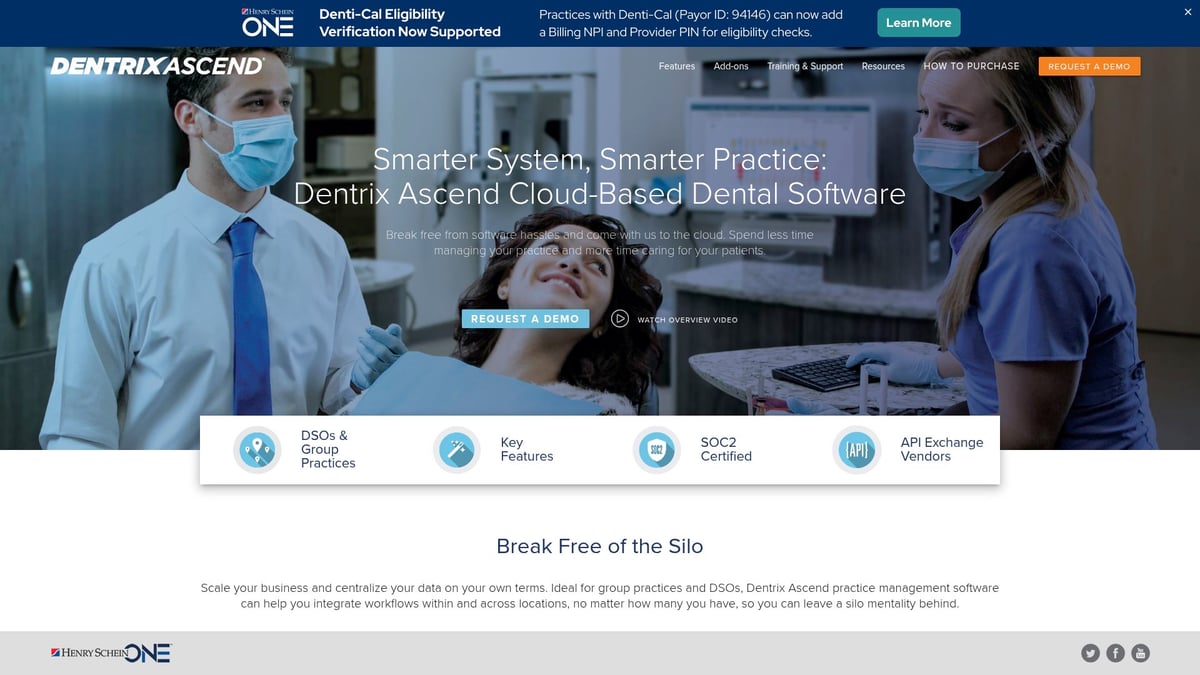
Key features include robust scheduling, billing, clinical charting, imaging integration, patient communications, and analytics. The intuitive user interface stands out, offering customizable workflows and seamless imaging connectivity. With regular updates and reliable customer support, Dentrix Ascend ensures data security and compliance, making it a strong contender among dental practice management systems.
Multi-location practices and fast-growing clinics benefit most from its cloud migration capabilities and centralized controls. However, users transitioning from Dentrix G may face a learning curve, and the premium pricing could be a consideration for smaller offices.
Pros:
- Intuitive UI and customizable workflows
- Strong data security and compliance
- Reliable customer support
Cons:
- Initial learning curve for legacy users
- Higher pricing than basic alternatives
For a deeper look at real user experiences, see Dentrix Ascend Software Reviews.
Open Dental
Open Dental is renowned for its open-source flexibility and strong community support. With pricing at $179 per month per location (2024), plus a possible one-time setup fee, it is one of the most cost-effective dental practice management systems available.
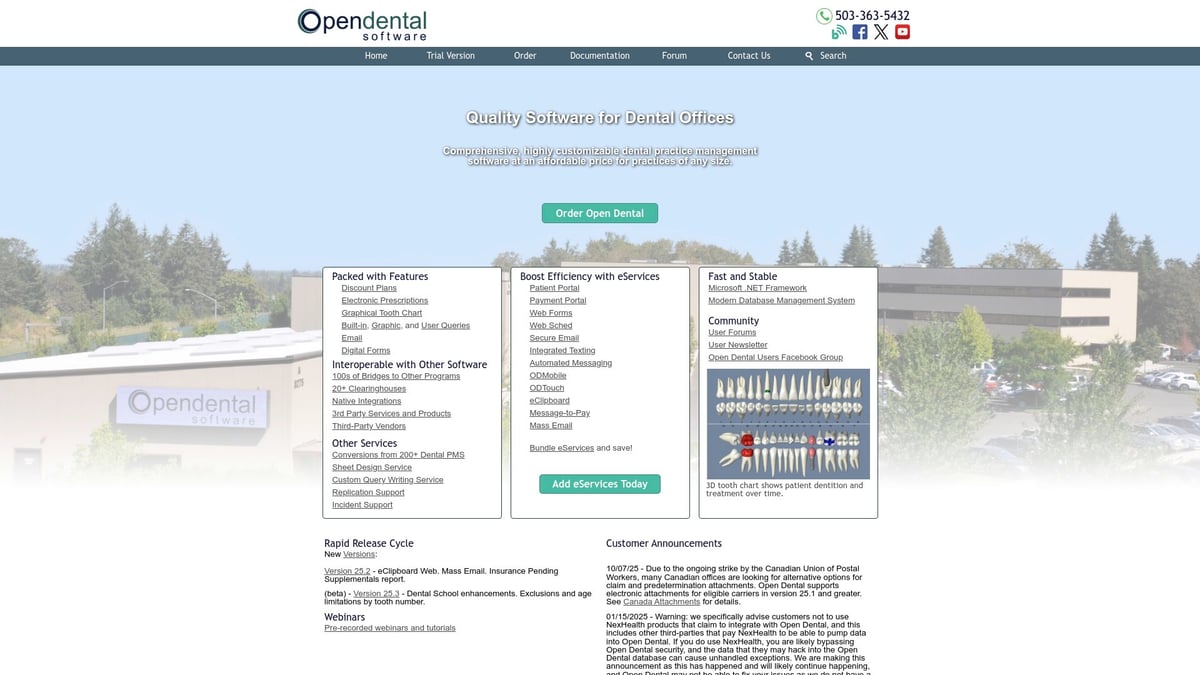
Core features include advanced scheduling, billing, charting, e-claims, imaging, a patient portal, and integrated texting. Open Dental's open API empowers tech-savvy teams to build custom integrations, making it ideal for practices with unique needs or specialized workflows.
Its transparent pricing and active user forums make it popular among budget-conscious and tech-forward offices. The DIY approach, however, means more IT involvement is often necessary, and the interface, while functional, is less modern than some competitors.
Pros:
- Highly customizable and transparent pricing
- Wide range of third-party integrations
- Active user community
Cons:
- Requires technical know-how for advanced features
- Interface could be more modern
For a comprehensive guide, check the Open Dental Complete Overview 2025.
Curve Dental
Curve Dental is a 100% cloud-based dental practice management system that prioritizes usability and mobility. Starting at $350 per month per provider (2024), the subscription includes support and updates, positioning Curve Dental among the premium dental practice management systems.
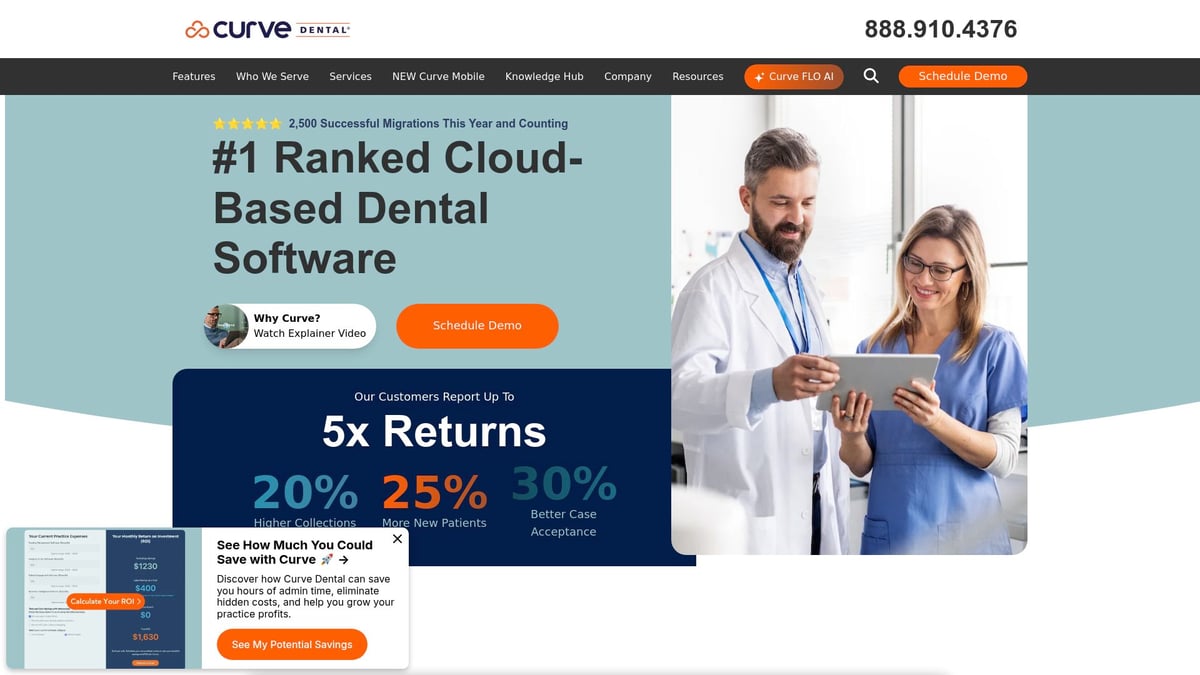
Key features are scheduling, charting, billing, imaging, patient engagement, and mobile access. The platform eliminates the need for servers or complex IT maintenance, which is perfect for startups and small to midsize practices. Fast onboarding and a modern user interface contribute to its appeal.
Curve Dental's regular feature releases and strong customer service are frequently highlighted by users. However, the higher cost may be a hurdle for solo practitioners, and some advanced features require additional add-ons.
Pros:
- No IT headaches, fast onboarding
- Modern, easy-to-use interface
- Responsive customer service
Cons:
- Higher monthly cost for small practices
- Add-ons needed for some advanced tools
Curve Dental remains a favorite for remote and hybrid dental teams seeking flexibility.
Eaglesoft
Eaglesoft, from Patterson Dental, offers both on-premise and cloud-enabled options, catering to a broad range of dental practices. Pricing is variable, with a perpetual license and annual support typically starting at around $2,000 upfront and $1,000 per year for support.
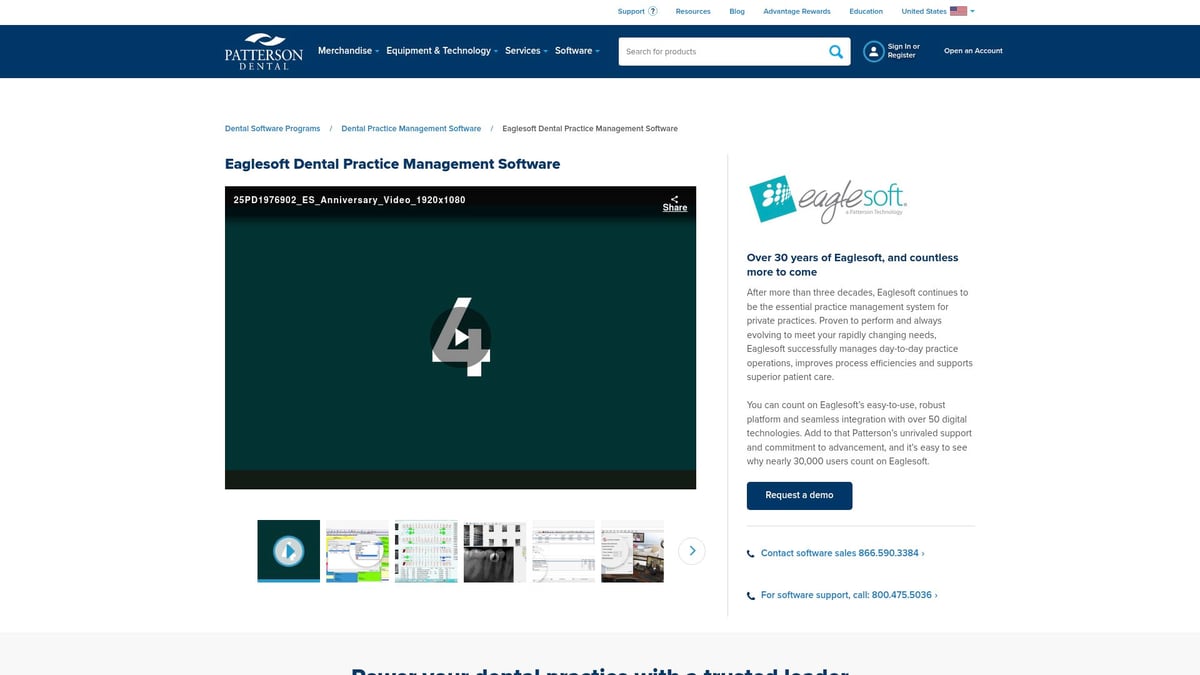
This dental practice management system delivers comprehensive scheduling, clinical charting, billing, digital imaging, and patient education features. Its deep integration with Patterson's imaging hardware is a major advantage for established practices.
Eaglesoft is trusted for reliability and robust support resources. However, its higher upfront costs and slower transition to full cloud functionality may not suit every clinic.
Pros:
- Trusted vendor with deep feature set
- Strong imaging integration
- Extensive training and support
Cons:
- Higher initial investment
- Cloud features developing more slowly
Eaglesoft is a top pick for practices already invested in the Patterson ecosystem.
CareStack
CareStack is an all-in-one, cloud-based platform tailored for enterprise and group dental practices. Pricing is custom, generally ranging from $400 to $600 per month per provider, reflecting its focus on scalability and advanced features.
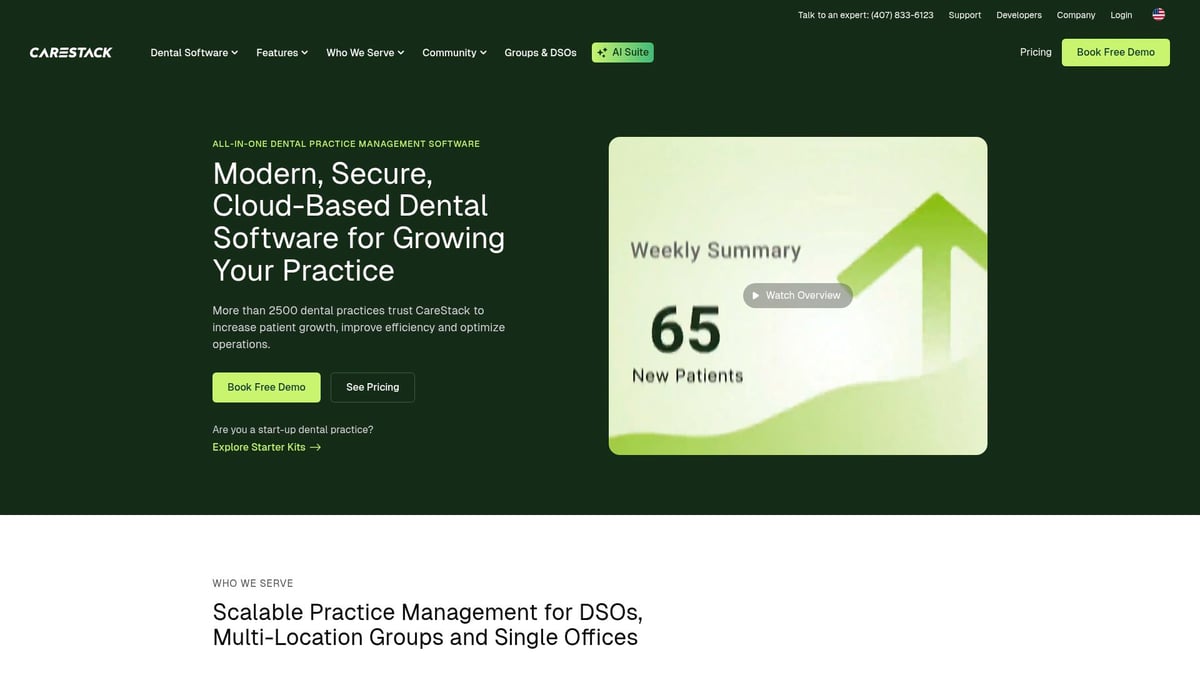
Key modules include scheduling, billing, charting, analytics, patient engagement, and teledentistry. CareStack's centralized management is ideal for dental service organizations (DSOs) and fast-scaling, multi-location practices.
The platform is praised for its comprehensive features and excellent reporting capabilities. However, the cost structure may not be cost-effective for solo practices, and smaller teams might experience a learning curve.
Pros:
- Enterprise-grade scalability
- Comprehensive analytics and reporting
- DSO-friendly management tools
Cons:
- Not ideal for solo or small practices
- More complex initial setup
For expert insights, visit CareStack Reviews and Insights.
Denticon by Planet DDS
Denticon by Planet DDS is a cloud-based dental practice management system favored by multi-location and enterprise dental groups. Pricing is custom but typically falls between $300 and $500 per month per provider.
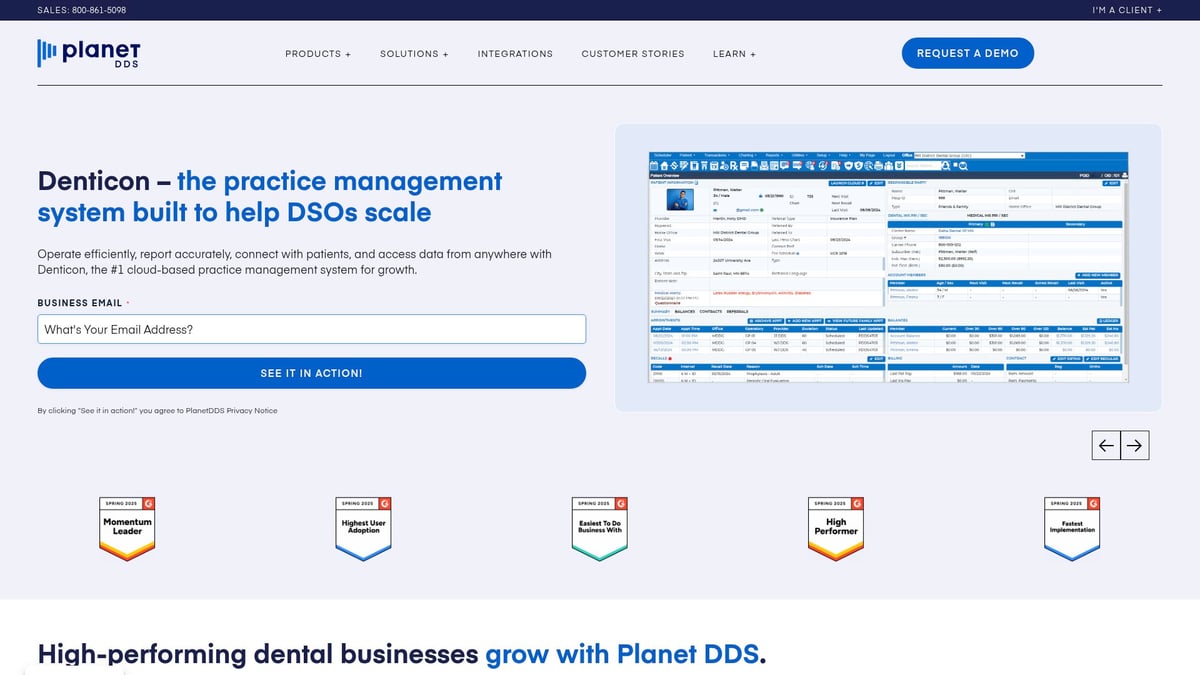
Denticon offers scheduling, billing, imaging, e-prescriptions, analytics, and patient communications. Its enterprise-grade scalability and strong compliance features make it a leading choice for DSOs and large practices needing robust security.
Users appreciate Denticon's reliable uptime, excellent customer support, and seamless imaging system integrations. Some smaller practices may find it more comprehensive than necessary, and advanced features require thorough staff training.
Pros:
- Excellent scalability and security
- Integrations with leading imaging solutions
- Dependable support
Cons:
- Might be too complex for smaller offices
- Advanced features require training
Denticon stands out for organizations focused on growth and regulatory compliance.
Tab32
Tab32 is a modern, cloud-native dental practice management system with a strong focus on AI and patient engagement. Pricing starts at $299 per month per provider (2024), positioning it competitively among innovative solutions.
Features include scheduling, charting, billing, imaging, recall automation, teledentistry, and analytics. The AI-powered reminders and communication tools help reduce no-shows and improve patient satisfaction.
Tab32 is ideal for tech-forward practices, startups, and clinics prioritizing digital engagement. Onboarding is fast, and the interface is intuitive, but some advanced features come at an extra cost, and support responsiveness can vary.
Pros:
- AI-driven patient engagement
- Quick onboarding and intuitive UI
- Frequent feature updates
Cons:
- Additional fees for advanced modules
- Support response times may fluctuate
Tab32 is a standout option for practices eager to leverage AI in their daily operations.
ABELDent Cloud
ABELDent Cloud, based in Canada, provides both cloud and on-premise options for dental practice management systems, with a strong emphasis on security and compliance. Starting at $249 per month per provider, it appeals to North American clinics.
Core features cover scheduling, charting, billing, imaging, a patient portal, and secure messaging. Bilingual support and flexible deployment options make ABELDent Cloud a great fit for compliance-focused clinics.
The platform is praised for excellent support, easy data migration, and customizable modules. However, international support is limited, and the interface, while functional, is less modern than some rivals.
Pros:
- Strong data security and compliance
- Bilingual support for Canadian practices
- Flexible deployment options
Cons:
- Limited international reach
- Interface could use modernization
ABELDent Cloud is a top contender for North American practices prioritizing data protection.
Smart Molars: Expert Reviews & Comparisons
While not a dental practice management system itself, Smart Molars is the most trusted resource for unbiased dental software reviews and comparisons. It offers free access to expert reviews, guides, and comparison tools, saving dental teams countless research hours.
Smart Molars delivers in-depth, impartial reviews of all major dental practice management systems, including side-by-side comparisons, buying guides, and real user feedback. Dentists, office managers, and consultants can confidently use this platform to make informed decisions and reduce the risk of costly software mistakes.
Pros:
- 100% independent and regularly updated
- Covers all leading platforms
- Real user insights and expert recommendations
Cons:
- Does not sell software directly
- Users must apply reviews to choose their solution
Smart Molars is an essential stop for anyone researching dental practice management systems.
How to Choose the Right System for Your Practice
Selecting the best dental practice management systems is a critical decision that can shape your clinic’s success for years to come. With so many options available, making the right choice starts with a clear, step-by-step approach.
Assessing Your Practice’s Needs
Before diving into demos, take stock of your unique requirements. Consider:
- Your practice size: solo, group, multi-location, or DSO
- Specialty focus: pediatric, orthodontic, general, or surgical
- Must-have features: billing, imaging, analytics, patient engagement, telehealth
- Budget limits and expected return on investment
- Technology comfort level of your team and training needs
For example, pediatric clinics may prioritize charting and family communication tools, while DSOs often need scalability and analytics. Understanding these details helps you filter the vast field of dental practice management systems. According to the Dental Practice Management Software Market Growth Report 2025, demand for customizable platforms is set to rise as clinics seek tailored solutions.
Comparing Vendors and Evaluating Support
Once you have a shortlist, take time to evaluate each vendor’s reputation and support. Look for:
- Responsive customer service and onboarding help
- Comprehensive training resources, including live and on-demand options
- Positive user testimonials and expert reviews
- Opportunities to test the product via demos, free trials, or pilot programs
- References from similar practices
Support quality is a top satisfaction driver for dental practice management systems users. Be sure to ask about post-purchase assistance, update frequency, and how issues are resolved. Real-world feedback from peers can be invaluable in making a confident choice.
Planning for Implementation and Future Growth
Switching dental practice management systems is a significant project. Start with a detailed migration and onboarding plan to minimize downtime:
- Set a realistic timeline for data transfer and staff training
- Identify key team members to champion the transition
- Roll out the new system in phases to reduce disruption
Plan for scalability, ensuring your chosen platform can grow with your practice. Data shows that cloud-based dental practice management systems can cut IT overhead by as much as 20 percent in the first year. By preparing for change and thinking ahead, you set the stage for long-term success.
Key Trends Shaping Dental Practice Management in 2025
The landscape of dental practice management systems is shifting rapidly, with 2025 poised to bring transformative trends. These changes promise to streamline workflows, boost patient satisfaction, and safeguard sensitive data.
AI, Automation, and Smart Integrations
Artificial intelligence is taking center stage in dental practice management systems, revolutionizing how clinics operate. AI-driven appointment scheduling, automated billing, and smart recall systems are now standard, helping practices reduce no-shows and optimize daily workflows.
- AI systems analyze patient data for smarter appointment slots.
- Automated reminders and digital follow-ups free up staff time.
- Seamless integrations with imaging, payment, and marketing platforms enable holistic management.
According to Integration of Artificial Intelligence into Dental Practice Management Platforms, these AI-powered features are boosting workflow efficiency and enhancing patient engagement. As a result, dental practice management systems are becoming smarter and more connected than ever.
Patient-Centric Features and Digital Experience
Modern dental practice management systems are prioritizing the patient experience. Mobile-first patient portals, online scheduling, and digital forms have become must-haves for busy clinics.
- Patients can book appointments, fill out forms, and view records from any device.
- Secure messaging and telehealth offer convenient communication.
- Digital engagement tools help clinics improve retention and satisfaction.
Practices that embrace these features report much higher patient loyalty. By delivering a seamless digital journey, dental practice management systems help clinics stand out in a competitive market.
Security, Compliance, and Data Privacy
Security is a top priority for dental practice management systems in 2025. With rising cyber threats, clinics must ensure robust protection for sensitive patient information.
- HIPAA and GDPR compliance are baseline requirements.
- Data encryption, strict access controls, and audit trails protect against breaches.
- Ongoing staff training and regular security updates minimize risks.
Recent trends show a sharp increase in cyberattacks targeting healthcare providers. Dental practice management systems with advanced security features are essential for safeguarding data and maintaining patient trust.