Discover how free dental software is transforming practice management for clinics of every size in 2026. With the right tools, dental practices can streamline workflows, boost patient care, and cut costs, all without sacrificing quality or security.
In this article, we break down the top 7 free dental software options that help practices thrive in today’s fast-changing dental technology landscape. You’ll find standout features, pricing details, ideal use cases, and honest pros and cons, so you can choose the best fit for your clinic’s needs.
Why Dental Practices Need Free Software Solutions in 2026
Discovering the right tools for your dental practice is more important than ever. In 2026, clinics are facing a rapidly changing landscape, with technology, cost, and patient expectations all evolving at once. Free dental software is emerging as a lifeline for practices that want to stay competitive, efficient, and compliant without breaking the bank.
Key Industry Trends and Cost Pressures
Dental practices are under more pressure than ever to control costs while delivering high quality care. Rising operational expenses, from staffing to equipment, make it crucial to find ways to maximize profitability.
At the same time, there's a growing demand for digital record-keeping, patient communication, and telehealth. Clinics are moving toward cloud-based and open-source practice management tools, which offer flexibility and accessibility. Regulatory requirements, such as GDPR and HIPAA, require strict data security and patient privacy controls. One standout trend is the use of automated appointment reminders, where practices have reported up to a 40 percent reduction in no-shows.
Benefits of Free Dental Software
Choosing free dental software eliminates upfront licensing fees, making advanced technology accessible even for startups and smaller clinics. This approach allows practices to try out different platforms and evaluate their fit before committing to a paid solution.
Free dental software also supports scalability, making it easier for growing practices to expand without worrying about budget constraints. In addition, these tools help clinics comply with digital health mandates, keeping workflows efficient and secure. For practices comparing their options, resources like Unbiased dental software reviews can help streamline the decision process and ensure the best fit for unique needs.
Common Limitations and Considerations
Despite the many benefits, free dental software often comes with trade-offs. Some solutions may offer limited support, fewer advanced features, or require a more technical setup. It's important to understand whether a platform is community-driven or vendor-supported, as this impacts the speed and quality of support.
Regular updates and security patches are essential for compliance and data protection. Practices should evaluate the update history and consider how ongoing development aligns with their needs. Balancing cost savings with functionality and security is key to making the right choice.
Real-World Use Cases
Free dental software has proven valuable in a variety of real-world scenarios. Solo practitioners can digitize appointment scheduling and billing, streamlining their daily operations. Multi-location clinics use these tools to standardize workflows without the need for large IT investments.
Practices transitioning from paper-based systems to digital platforms find that free dental software helps them modernize without overwhelming costs. By starting with a free solution, clinics can adapt at their own pace and scale up as their needs grow.
7 Best Free Dental Software Solutions for 2026
Looking for the right free dental software in 2026? With so many options, choosing the best fit can be overwhelming. Below, we break down the top 7 solutions that are helping dental practices streamline their operations, boost efficiency, and provide better patient care, all while keeping costs low.
Whether you run a solo practice or a multi-location clinic, each of these free dental software platforms offers unique features and benefits. Let’s explore what sets each one apart and how they could transform your practice.
CloudMedico
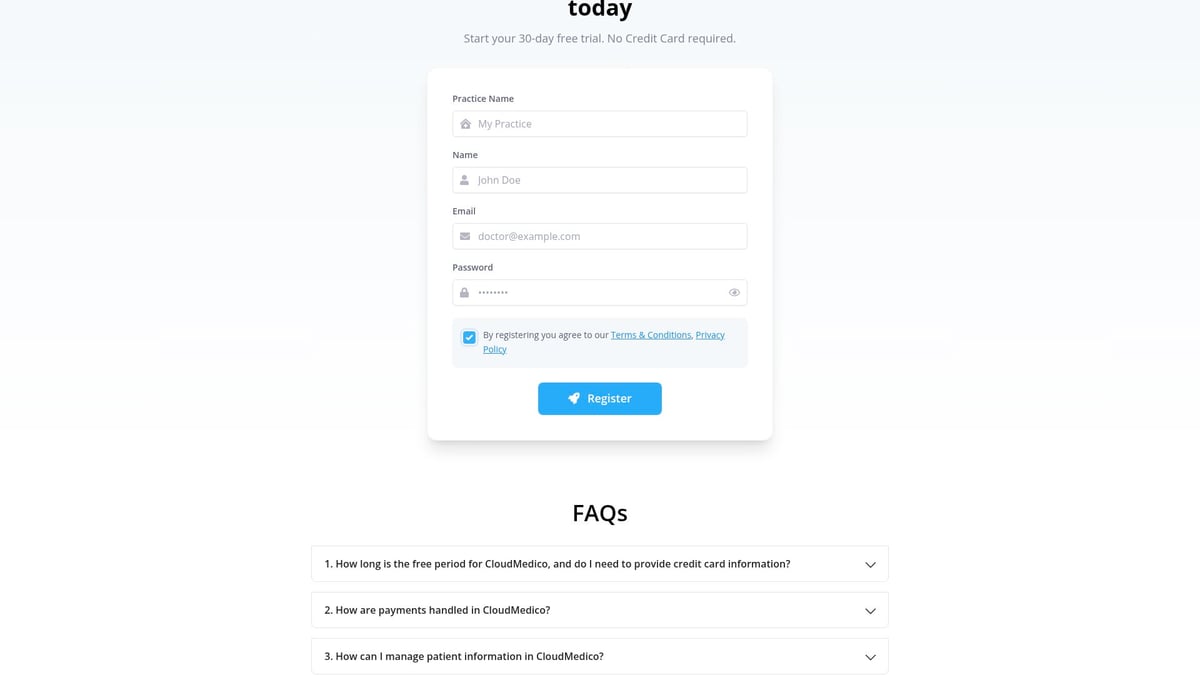
CloudMedico stands out as a leading free dental software platform for 2026. It offers a robust free tier supporting up to 100 patients, making it ideal for startups and small clinics. With no credit card required, practices can get started quickly and at no cost.
Core Features:
- Appointment scheduling with automated SMS and email reminders.
- Digital treatment planning.
- Patient portal for self-service and secure document access.
- Online payments and document management.
- Custom dental fields and integrated telehealth.
CloudMedico is designed to reduce no-shows by up to 40 percent, thanks to its reliable reminder system. The platform is GDPR compliant and boasts a setup process that takes less than five minutes, allowing clinics to digitize their workflows almost instantly.
Pros:
- Intuitive and modern interface.
- Comprehensive feature set for most dental needs.
- Secure EU-based servers and no hidden fees.
Cons:
- The free plan is limited to 100 patients.
- Advanced analytics may require a paid upgrade.
Unique Selling Points:
- Automated recall management keeps patients engaged.
- Digital consent forms streamline compliance.
- Tailored dental workflows for general, cosmetic, and family dentists.
CloudMedico’s all-in-one approach makes it an excellent choice for clinics seeking free dental software that doesn’t compromise on professional features.
Smart Molars: Unbiased Dental Software Reviews
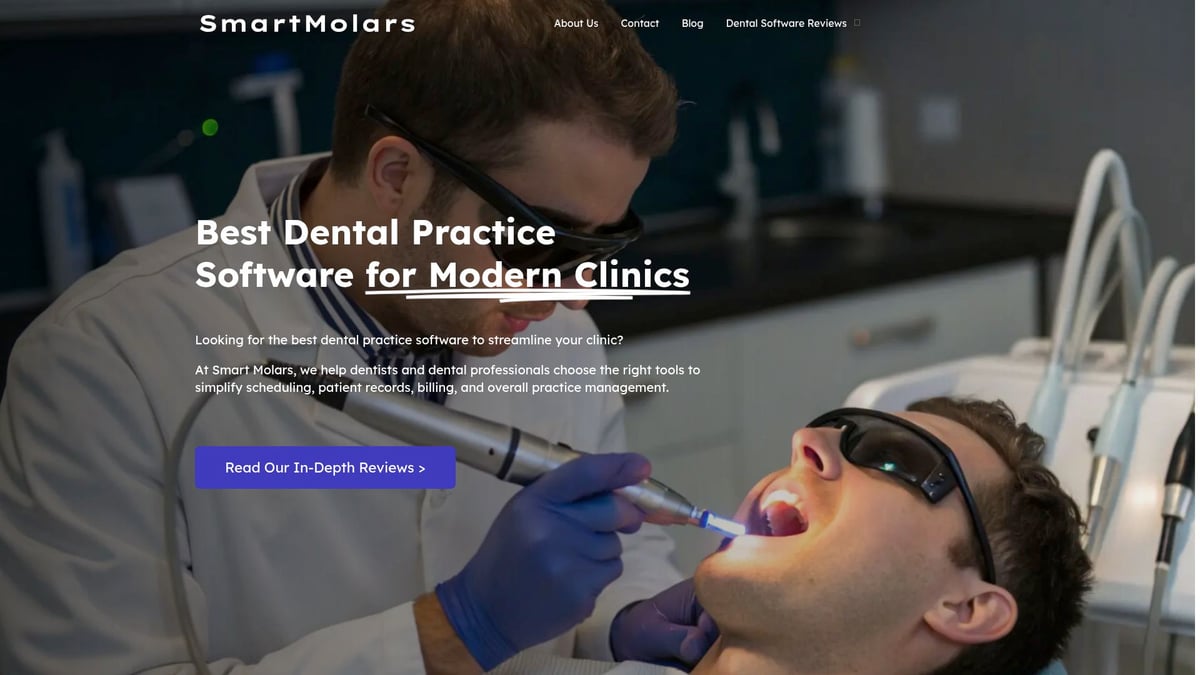
Smart Molars is not a software provider, but a specialized platform that delivers in-depth, unbiased reviews of free dental software and paid alternatives. For dental professionals who want clarity before making a decision, Smart Molars is an invaluable resource.
Core Features:
- Detailed evaluations of leading free dental software and premium solutions.
- Side-by-side comparison guides for quick insights.
- Expert buying resources and up-to-date industry trends.
Key Benefits:
- Saves practices hours of research time.
- Ensures informed decisions on software selection.
- Covers all major categories: practice management, charting, billing, and more.
Pros:
- 100 percent independent, with no vendor bias.
- Content is regularly updated for accuracy.
- Trusted by dental professionals and consultants.
Cons:
- Does not provide or sell software directly.
- Serves purely as a research and review hub.
Unique Selling Points:
- Focused exclusively on dental software.
- Delivers research-driven, actionable recommendations.
If you’re looking to compare free dental software options in detail, start with the Dental software reviews category to explore comprehensive guides and practical insights.
Clear.Dental
Clear.Dental is a free, open-source dental EHR software built for Linux environments, making it a favorite among tech-savvy dental teams. Licensed under GPLv3, it gives clinics full control over their data and infrastructure.
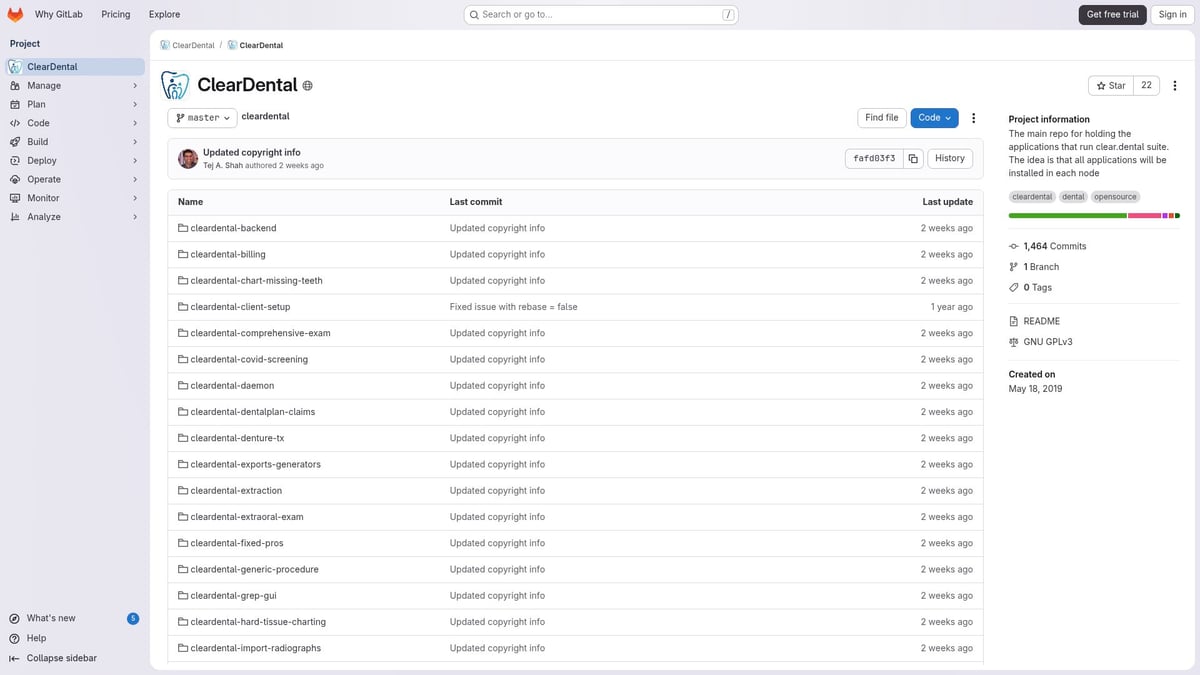
Core Features:
- Touch-friendly interface optimized for clinical use.
- Distributed hybrid cloud filesystem for resilience and performance.
- Customizable electronic health records and dental charting.
- Offline access during network interruptions.
Key Benefits:
- High adaptability for unique practice workflows.
- Strong data control and privacy.
- Weekly updates as of 2025 ensure the software remains secure and current.
Pros:
- Highly customizable and modifiable.
- Robust security features.
- Supports practices that prefer Linux and open-source solutions.
Cons:
- Requires technical expertise for setup and ongoing maintenance.
- Community support only, with no formal vendor assistance.
Unique Selling Points:
- First dental EHR designed specifically for Linux.
- Touch-optimized for chairside use in clinics.
Clear.Dental is a top free dental software choice for practices wanting open-source flexibility combined with modern usability.
Apexo Application
Apexo is a free dental software solution created by a practicing dentist, focusing on practical, user-friendly features. It is open-source and offers both self-hosted and cloud deployment options, making it accessible to a wide range of clinics.
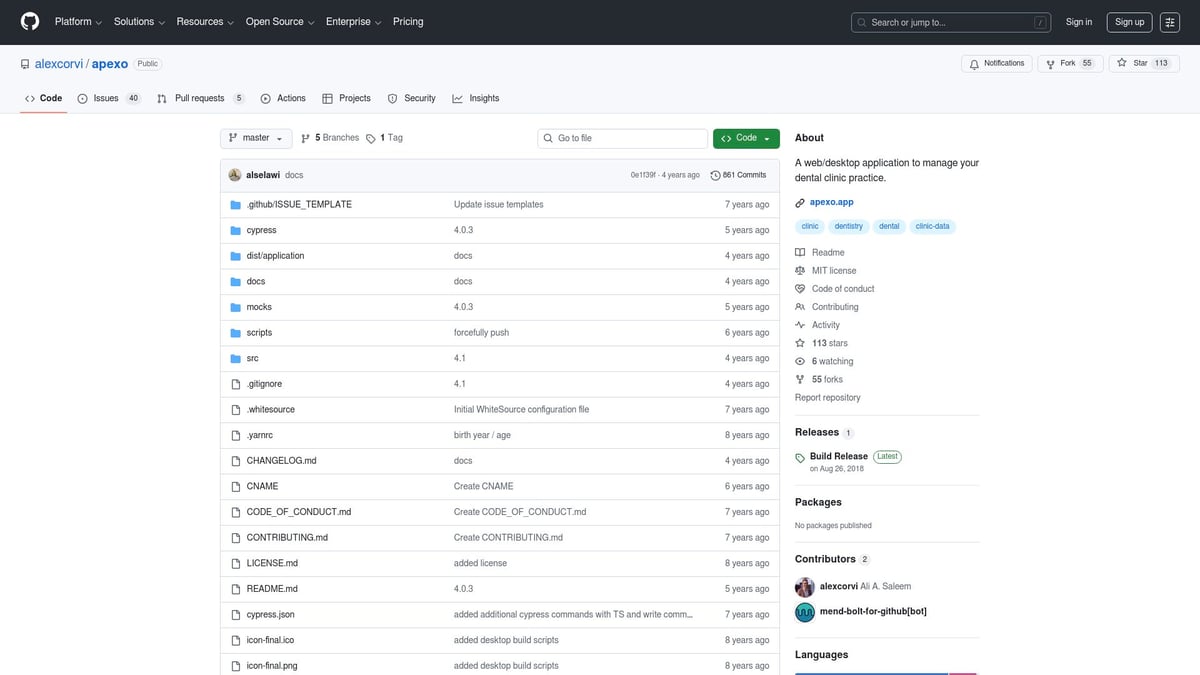
Core Features:
- Visual dental charting and appointment scheduling.
- Financial tracking for easy practice management.
- Multi-user permissions and multi-language support.
- Offline-first functionality with secure sync.
- HIPAA-compliant encryption for data protection.
Key Benefits:
- Designed from a dentist’s perspective for real-world workflows.
- Supports team-based environments and collaboration.
- Works seamlessly even without a constant internet connection.
Pros:
- Flexible user management and customizable permissions.
- Broad language support for international clinics.
- Strong security and privacy measures.
Cons:
- Last updated in 2022, so may lack the latest features.
- Requires technical setup and self-hosting.
- Limited direct support, mostly community-driven.
Unique Selling Points:
- Graphic dental history tracking per tooth.
- Offline-first design for uninterrupted workflow.
For clinics seeking a practical, dentist-designed free dental software, Apexo provides a compelling balance of features and flexibility.
DentneD
DentneD is a free, open-source dental software built for Windows environments. It is ideal for practices needing a client-server solution to manage multiple workstations.
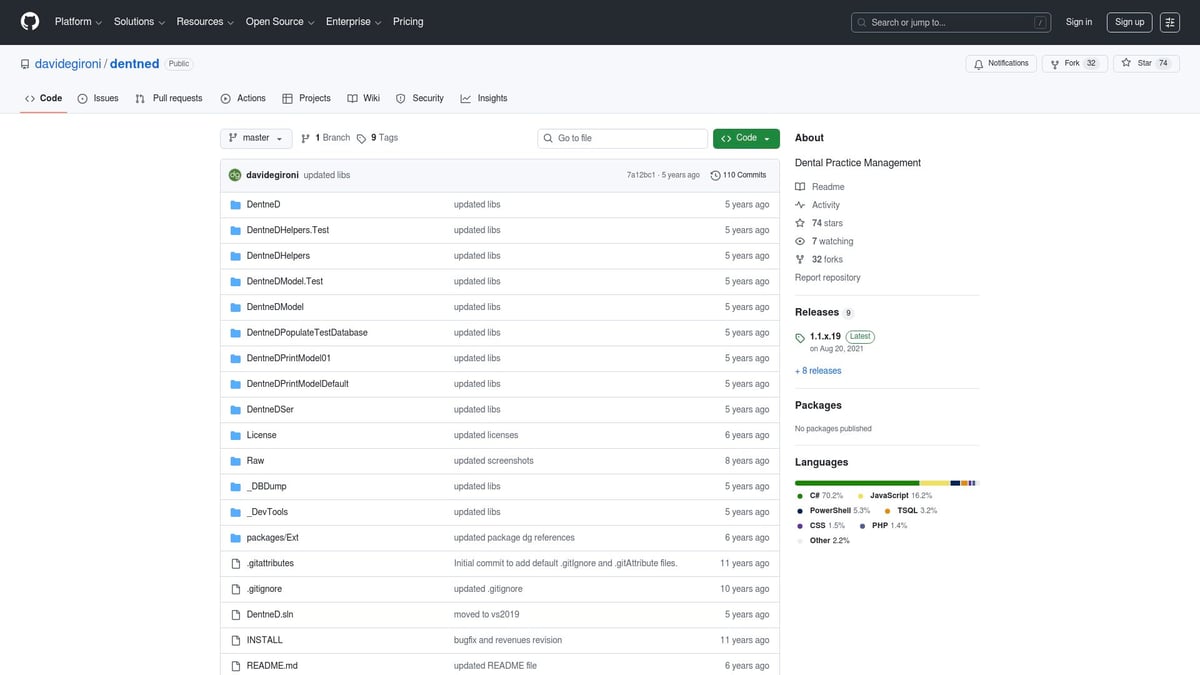
Core Features:
- Comprehensive doctor and patient record management.
- Appointment scheduling and billing.
- Customizable reports and PDF templates.
- Client-server architecture for multi-computer access.
- Multi-language support for diverse teams.
Key Benefits:
- Supports larger clinics with several users.
- Extensive reporting for practice analysis.
- Adaptable for various practice sizes.
Pros:
- Full set of features for daily dental operations.
- Supports attachments and notes in patient records.
- Customizable templates for documentation.
Cons:
- Last updated in 2021.
- Requires technical setup and IT knowledge.
- Limited community support.
Unique Selling Points:
- Server-client model enhances scalability.
- Deep reporting features for business insights.
DentneD is a strong contender for Windows-based clinics needing free dental software that can handle multi-user environments.
OpenMolar
OpenMolar is a free, open-source dental software solution written in Python, designed for practices that value flexibility and community-driven development.
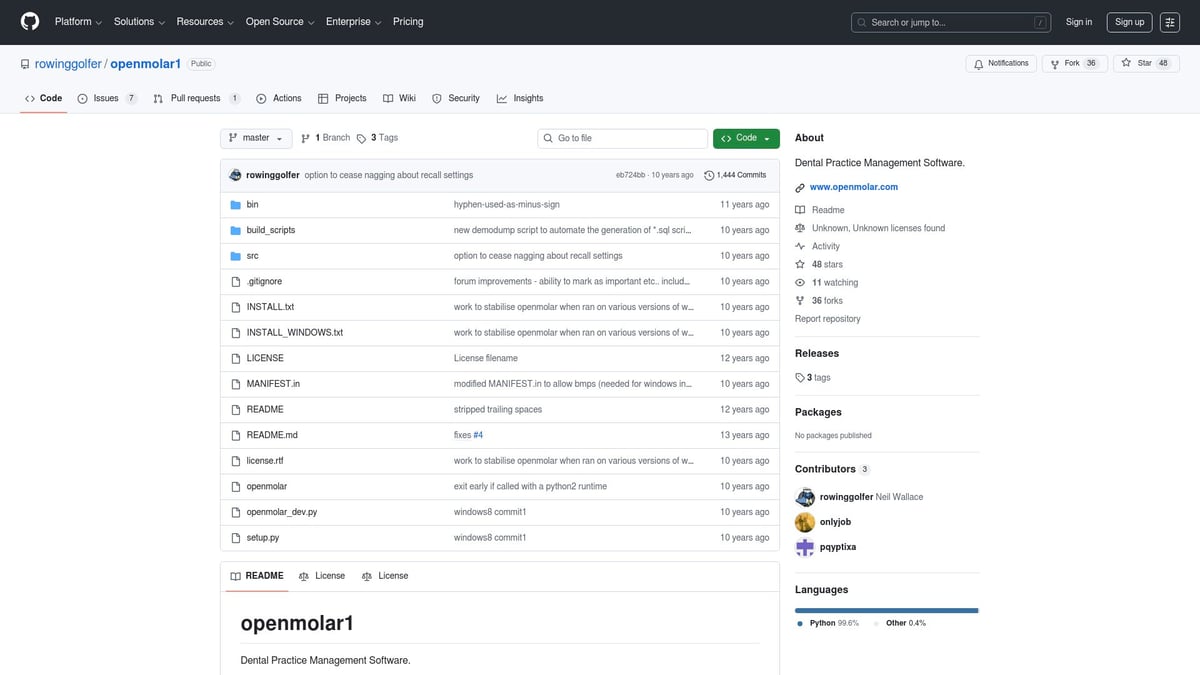
Core Features:
- Patient management and appointment calendars.
- Billing and invoicing tools.
- Practice analysis reports for business insight.
- Support for MySQL and PostgreSQL backends.
Key Benefits:
- Highly customizable for unique workflows.
- Community-driven, allowing user feedback to shape updates.
- Plugin-friendly architecture for extended functionality.
Pros:
- Developed by a dentist for real-world needs.
- Modifiable source code for IT teams.
- Flexible backend database options.
Cons:
- Last major update in 2017, may lack new compliance features.
- Requires server setup and technical expertise.
- Limited support resources.
Unique Selling Points:
- Open architecture for plugin development (OpenMolar2).
- Focused on open-source enthusiasts and tech-forward clinics.
OpenMolar remains a solid free dental software choice for teams with in-house IT skills and a passion for open-source solutions.
DinoDent
DinoDent is a free dental software platform tailored for Bulgarian clinics, offering specialized tools for compliance and national health insurance integration.
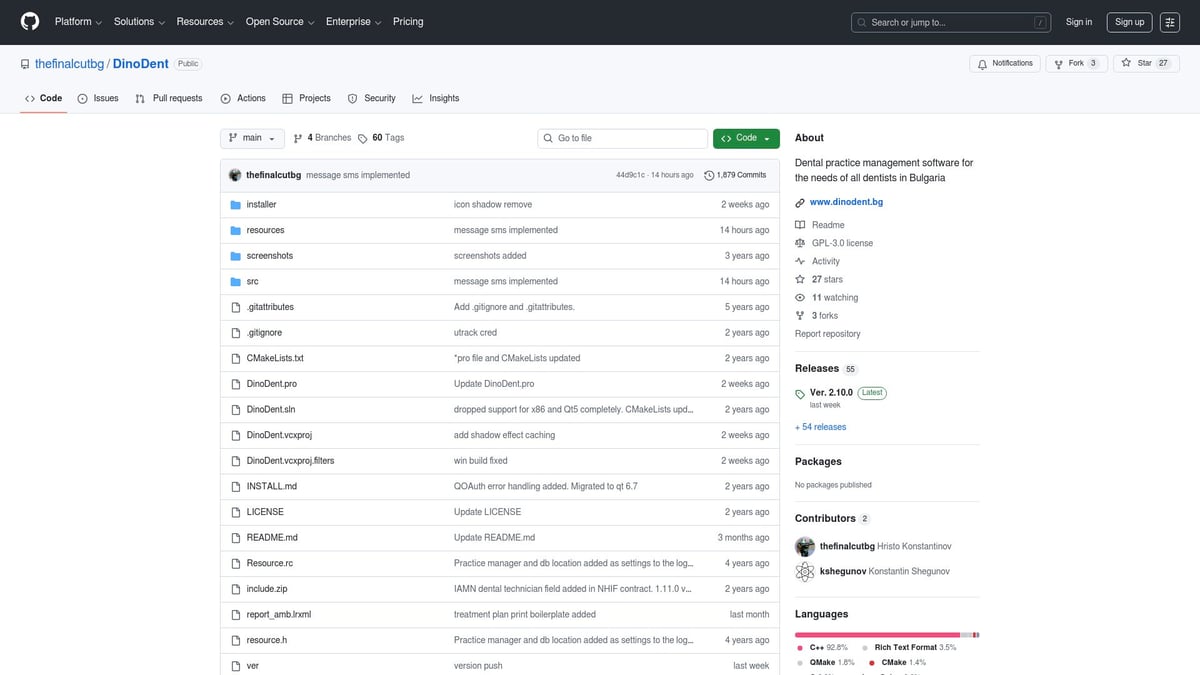
Core Features:
- Seamless integration with Bulgaria’s NHIF system.
- Electronic prescriptions and multi-user support.
- Financial management and dental/periodontal status tracking.
- Daily updates and PKCS11 e-signature capabilities.
Key Benefits:
- Ensures compliance with local health regulations.
- Robust financial and reporting tools.
- Actively maintained by a practicing dentist.
Pros:
- Strong localization for Bulgarian practices.
- Multi-practice support for larger organizations.
- Frequent updates and improvements.
Cons:
- Applicability is limited outside Bulgaria.
- Requires technical setup and maintenance.
Unique Selling Points:
- Built for local compliance from the ground up.
- Developed by dental professionals for practical use.
DinoDent is the go-to free dental software for Bulgarian clinics seeking advanced compliance and local integration features.
How to Choose the Right Free Dental Software for Your Practice
Selecting the best free dental software for your clinic is a crucial decision that can influence your team’s workflow, patient satisfaction, and regulatory compliance. With so many options on the market, it’s important to break down your choices based on your unique needs and resources.
Evaluating Practice Needs and Priorities
Start by assessing your practice’s size, specialty, and daily operations. Do you work solo, in a group, or across multiple locations? List your must-have features, such as appointment scheduling, dental charting, billing, or e-prescriptions. Compliance is another key factor, especially if you handle sensitive patient data or operate in regions with strict privacy laws.
To make this process easier, consider using a Practice management software guide that helps you compare features and match them to your clinic’s goals. This step ensures the free dental software you choose fits your workflow and patient care standards.
Technical Considerations
Next, review your practice’s technical capabilities. If you have in-house IT staff or tech-savvy team members, open-source or self-hosted free dental software can offer greater customization and control. For clinics without technical resources, cloud-based or vendor-hosted solutions may be easier to implement and maintain.
Think about how the software will integrate with your current systems, such as imaging tools or insurance billing. Also, weigh the pros and cons of storing data in the cloud versus on your own servers, balancing security and accessibility.
Support and Community Factors
Support is another critical factor when evaluating free dental software. Community-supported platforms often rely on user forums and documentation, which can delay troubleshooting if issues arise. Vendor-supported options may offer more structured help, but these can be limited in the free tier.
Check how often the software receives updates and security patches. A strong, active user community can be a valuable resource for tips and troubleshooting. Look for platforms with detailed knowledge bases and responsive forums.
Cost and Scalability
While free dental software eliminates licensing fees, there may be other costs to consider. Some platforms cap the number of patients or restrict advanced features in their free tier. Hosting, maintenance, and future upgrades could also add expenses as your practice expands.
Review the software’s scalability. Will it grow with your clinic, or will you need to switch platforms as your needs change? Planning for future growth now can prevent costly migrations later.
Real-World Scenarios
Consider practical examples before making your final choice. If you’re launching a new practice with limited IT support, a plug-and-play, vendor-hosted free dental software may be your best fit. On the other hand, a tech-savvy clinic might benefit from open-source solutions that allow extensive customization.
List out your current pain points and map them to features offered by each software. This approach ensures you select a solution that not only meets your immediate needs but also supports your long-term vision.
Key Features to Look for in Free Dental Software
Choosing the right free dental software is about more than just saving money. To truly empower your practice, you need to look for features that support daily operations, patient satisfaction, and long-term growth. Let’s break down what you should expect from top solutions in 2026.
Essential Practice Management Tools
At the heart of every free dental software are tools that keep your clinic running smoothly. Look for robust appointment scheduling with automated reminders, which can reduce no-shows dramatically. Comprehensive patient records and dental charting are must-haves, allowing your team to access treatment history in seconds.
Digital treatment plans and e-prescriptions streamline diagnostics and prescriptions. Integrated billing, invoicing, and online payments make financial management seamless. Practices benefit most when these features are intuitive and easy to navigate.
Patient Engagement and Communication
Modern free dental software should help you build strong patient relationships. Features like patient portals give clients 24/7 access to their records, appointment scheduling, and educational resources. Secure messaging enables clear communication, while telehealth options support virtual consultations and follow-ups.
Automated recall and marketing campaigns keep your patient base engaged and informed. These tools not only enhance satisfaction but also drive retention and referrals for your practice.
Security and Compliance
Security is non-negotiable when handling sensitive patient data. Top free dental software solutions offer end-to-end encryption to protect information at every stage. Ensure your platform complies with GDPR, HIPAA, or local regulations, depending on your region.
Role-based access control and audit trails safeguard against unauthorized access. For more on best practices in this area, explore **Data Security and Compliance in Dental Software**, which highlights the importance of encryption and regular security reviews.
Reporting and Analytics
Insightful reporting is vital for monitoring productivity, identifying trends, and improving patient outcomes. Free dental software should offer customizable reports on appointments, billing, and treatments.
Look for options that integrate with external analytics or accounting tools. The ability to track key metrics helps you make data-driven decisions, spot bottlenecks, and optimize your clinic’s workflow without extra cost.
User Experience and Accessibility
A user-friendly interface is essential for quick onboarding and efficient daily use. Free dental software should support multiple languages to accommodate diverse teams. Mobile and offline access options are increasingly important for busy clinics and remote access needs.
Intuitive design reduces training time and errors. Practices with limited IT support benefit from platforms that prioritize simplicity and accessibility, ensuring staff can focus on patient care.
Integration and Customization
The best free dental software adapts to your unique workflows. Look for platforms that support integration with imaging devices, labs, and third-party services. Custom fields and templates let you tailor processes to your specialty.
For clinics prioritizing dental charting, check out this Dental charting programs overview to understand what’s possible in modern solutions. Flexible integration and customization options future-proof your investment and scale with your practice.
Common Pitfalls and Misconceptions About Free Dental Software
Choosing free dental software can seem like an easy win for your practice, but there are several common pitfalls and myths to watch for. Understanding these misconceptions will help you make smarter, safer decisions as you move your clinic’s technology forward.
Misconception: Free Software Is Always Up-to-Date
Many believe free dental software stays current with regulations and technology. In reality, updates often rely on volunteer communities. This can lead to delays, especially with compliance needs like GDPR or HIPAA. Practices using outdated systems may face security risks or fail audits, so always check the update history before committing.
Misconception: Free Means No Support Issues
It’s easy to assume free dental software comes with reliable support. However, most free options depend on community forums or user documentation. When problems arise, you might wait days for help or need to pay external IT experts. For clinics valuing quick resolutions and smooth workflows, professional support is a game changer. For more insight on how support impacts software benefits, see Benefits of Dental Office Software.
Misconception: All Features Are Included
Not all free dental software packages offer complete functionality. Advanced tools like automated reminders or analytics may be locked behind paid plans or unavailable entirely. Practices often discover these gaps only after investing time in setup and staff training. Review each solution’s feature list and patient limits to avoid unexpected obstacles.
Misconception: Free Software Is Always Secure
Security is a top concern for any clinic. Some believe free dental software is as secure as paid alternatives. In practice, open-source and free tools require users to actively monitor for vulnerabilities and updates. Without regular security patches, patient data could be at risk. Assign someone in your team to follow community updates and best practices.
How to Avoid These Pitfalls
| Pitfall | Mitigation Strategy |
|---|---|
| Outdated Software | Check update logs, join user forums, schedule regular reviews |
| Support Gaps | Budget for external IT, choose solutions with active communities |
| Feature Limits | List must-have features, test software with real scenarios |
| Security Issues | Enable encryption, update regularly, review audit trails |
By staying informed about these realities and evaluating each free dental software solution carefully, you can protect your practice from costly surprises and focus on delivering excellent patient care.