The orthodontic industry is changing faster than ever, with technology shaping how clinics operate and deliver care. In 2026, choosing the right orthodontic practice management software can dramatically impact your clinic’s efficiency and patient experience. This article uncovers the 7 top orthodontic practice management software platforms for 2026, guiding you through essential features, up-to-date pricing, pros and cons, and real-world use cases. Whether you want to streamline workflows, boost profitability, or deliver better care, this comprehensive comparison will help you make an informed decision for your practice’s future.
Why Orthodontic Practice Management Software Matters in 2026
The orthodontic world is rapidly evolving, and your clinic’s success hinges on keeping pace. As we move into 2026, orthodontic practice management software is no longer just a back-office tool—it’s the foundation for patient care, staff productivity, and business growth.
The Changing Landscape of Orthodontic Practices
Orthodontic practices are facing a new era shaped by digital expectations and advanced technology. Patients want seamless digital experiences, from online scheduling to virtual consultations. Regulations around data privacy are stricter, requiring clinics to use secure, compliant systems.
Remote access is now essential, enabling teams to collaborate and manage care from anywhere. The integration of imaging, billing, and communication tools within orthodontic practice management software streamlines workflows and minimizes errors. Automation is also on the rise, reducing administrative burden while freeing up staff to focus on patient care.
For a deeper dive into the fundamentals and options available, check out this dental practice management software guide.
Key Benefits for Modern Orthodontic Clinics
Adopting advanced orthodontic practice management software brings significant advantages. Automated appointment scheduling reduces manual errors and fills gaps in the calendar. Patient data is centralized, making it quick to find treatment history or insurance details.
Revenue management becomes smoother, with tools for billing, insurance verification, and payment tracking. Automated reminders and patient portals boost engagement, leading to fewer missed appointments. Analytics dashboards help you make smarter business decisions, while scalable solutions support single clinics and multi-location groups alike.
Essential Features to Look For in 2026
Choosing the right orthodontic practice management software means looking for features that future-proof your clinic. Cloud-based access ensures you can work from any device, while mobile compatibility keeps your team connected.
Seamless integration with imaging and cephalometric tools is a must for efficient diagnostics. Customizable workflows and automated patient communication save time. Security is non-negotiable, with HIPAA and GDPR compliance built in. AI-driven analytics and predictive scheduling are becoming standard, helping clinics anticipate needs and optimize operations.
Real-World Impact: Case Studies & Data
The impact of orthodontic practice management software is clear in real-world results. Practices using leading platforms have slashed no-show rates by up to 40 percent, thanks to automated reminders and digital engagement.
Clinics that embrace automation save over 10 hours of administrative work each week. Patient satisfaction scores climb as digital tools create smoother experiences. Revenue can jump between 10 and 106 percent with the right software in place. Multi-location groups report better coordination and more accurate reporting, all thanks to advanced orthodontic practice management software.
7 Top Orthodontic Practice Management Software in 2026
Choosing the right orthodontic practice management software can transform your clinic’s efficiency, profitability, and patient experience. With technology evolving rapidly, 2026 brings a new generation of solutions tailored for every type of orthodontic practice. Below, we review the top 7 platforms—each excelling in unique ways, from imaging integration to automation, scalability, and user experience.
Smart Molars: The Go-To Resource for Dental Software Decisions
Smart Molars is a trusted resource designed to demystify the orthodontic practice management software market. It offers unbiased, expert-driven reviews and regularly updated guides on leading dental and orthodontic software.
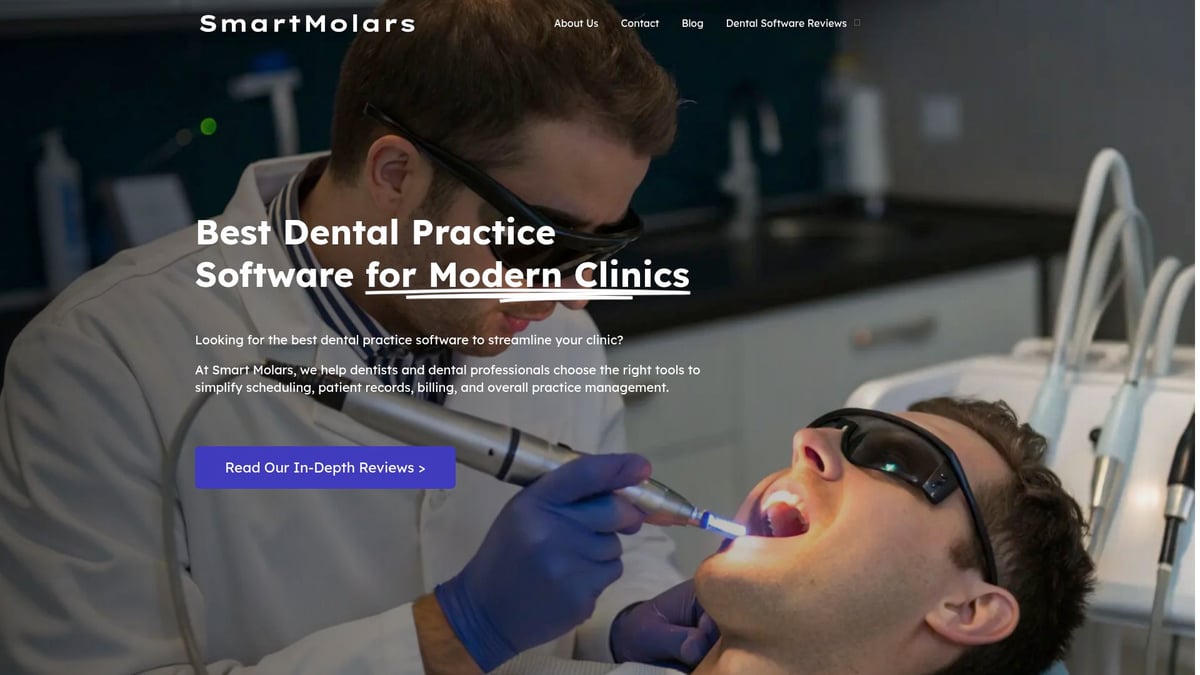
This platform stands out for its impartial comparisons and transparent analysis of features, integrations, and user experiences. With comprehensive guides and up-to-date pricing, Smart Molars helps orthodontists make informed choices and avoid costly mistakes when selecting orthodontic practice management software.
Ideal for practice owners, managers, and consultants, Smart Molars is 100 percent independent and focused exclusively on dental technology. Its detailed reviews save valuable time and support confident decision-making, especially for those overwhelmed by the crowded software marketplace.
Pros include free access, in-depth analysis, and a reputation trusted by dental professionals. The main drawback is that Smart Molars does not sell or directly integrate software, serving as an advisory platform only.
For a closer look at side-by-side platform details, check out this orthodontic software comparison guide.
Adit Orthodontics Software
Adit Orthodontics Software is an all-in-one solution that modernizes every aspect of clinic operations. It streamlines scheduling, billing, digital forms, automated reminders, payment processing, and AI-powered analytics into a single, user-friendly platform.
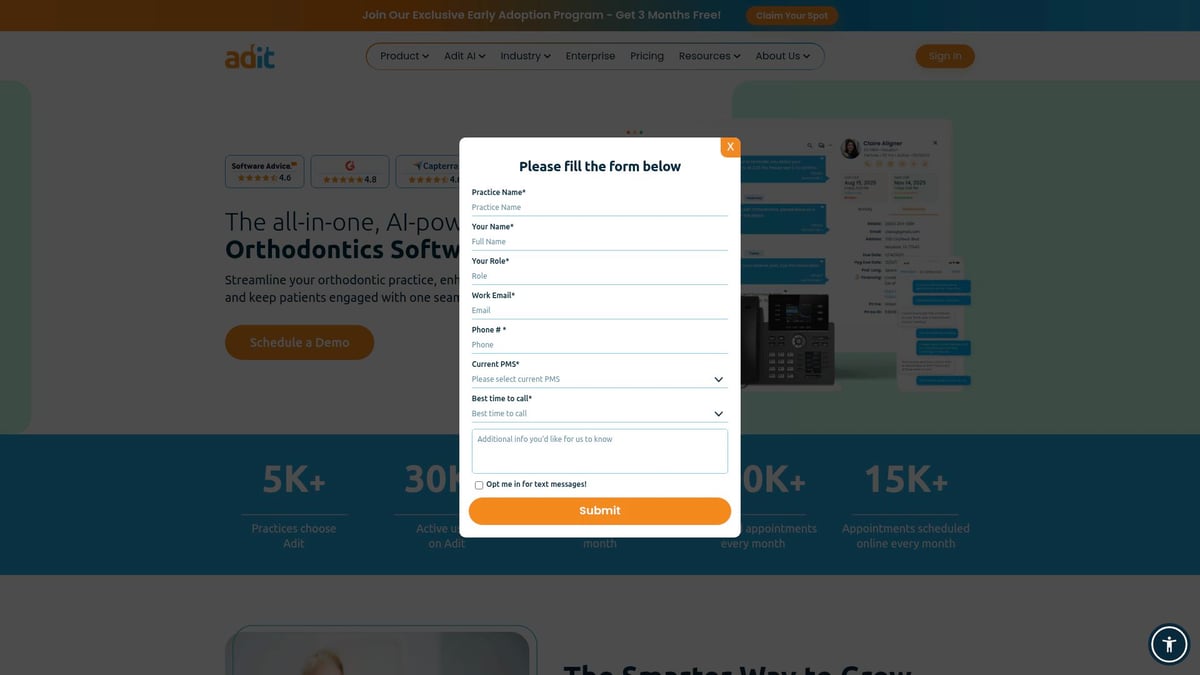
Adit’s unique features include AI call intelligence, mass texting, auto-filled insights, and flexible payment plans. It is entirely cloud-based, ensuring secure remote access for orthodontic practices of all sizes. The orthodontic practice management software reduces administrative workloads by up to 50 percent and boosts patient retention through automated engagement tools.
Adit is ideal for solo practitioners, group practices, and multi-location clinics prioritizing digital transformation. Its custom pricing is often cited as more cost-effective compared to other orthodontic practice management software platforms.
The pros are impressive: streamlined operations, improved patient retention, and a rapid learning curve. On the downside, some of the newer AI-driven features may require additional staff training, and regional availability can be limited.
Notably, Big Sky Smiles reported a 106 percent revenue jump in just one month after adopting Adit, making it a compelling choice for practices seeking measurable growth.
Dolphin Imaging & Management Software
Dolphin Imaging & Management Software is a powerhouse for practices requiring advanced imaging and cephalometric analysis. It combines robust orthodontic practice management software capabilities with detailed imaging, morphing, and treatment planning tools.
Clinics benefit from seamless integration with imaging devices and advanced morphing features, making Dolphin ideal for multi-specialty and orthodontic clinics with significant diagnostic needs. Customizable modules allow practices to tailor the system, while extensive reporting supports data-driven decisions.
Pricing is based on the selected modules and practice size, making it flexible for different budgets. The main advantages are industry-leading imaging, deep integration, and a strong reputation built over years in the market.
However, the full feature set can carry a steep learning curve and higher cost. For practices valuing diagnostic accuracy and workflow efficiency, Dolphin stands out—especially when paired with the latest imaging and clinical AI tools to enhance patient care.
topsOrtho Practice Management Software
topsOrtho is a cloud-based orthodontic practice management software designed for scalability and reliability. Its strengths lie in real-time updates, robust multi-location support, and seamless integration with imaging and billing systems.
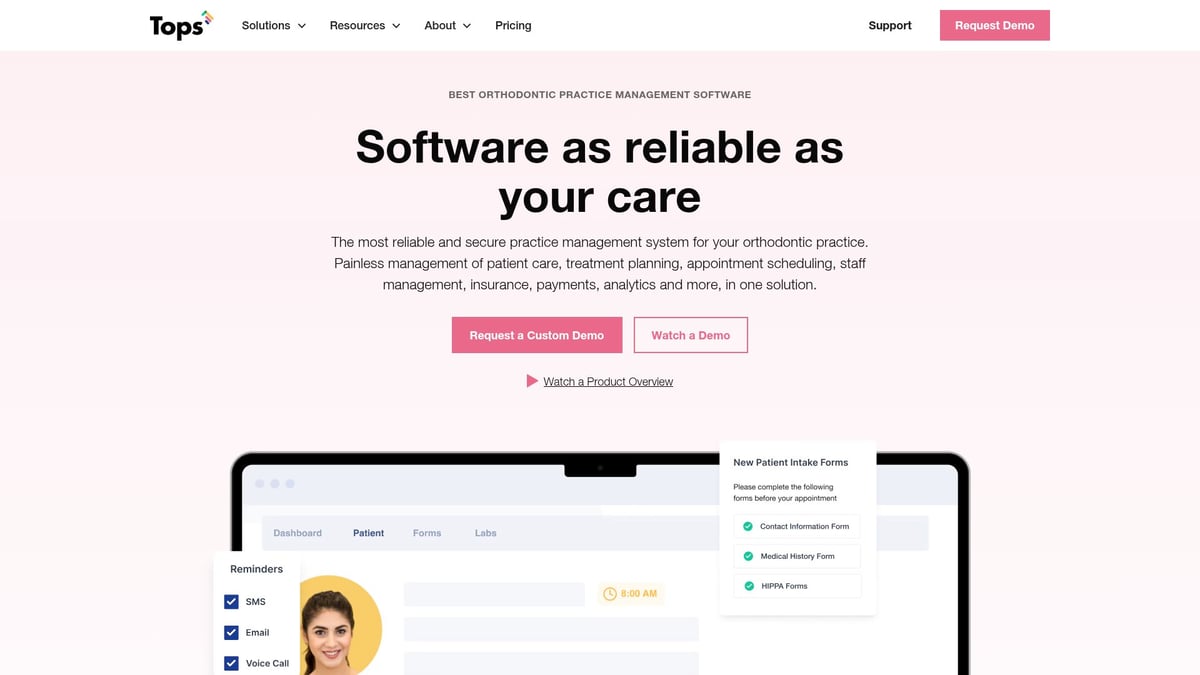
The platform offers comprehensive scheduling, billing, imaging integration, and patient portals. Practices benefit from mobile access, allowing staff to manage workflows remotely. topsOrtho is known for excellent customer support, making onboarding and troubleshooting straightforward.
Pricing is subscription-based, with packages tailored to the needs of growing practices and multi-site groups. Some advanced features are available as add-ons, and migration assistance may be necessary during setup.
Multi-location clinics often report improved coordination and reduced IT overhead after adopting topsOrtho. For orthodontists seeking reliable, cloud-based orthodontic practice management software, this solution delivers flexibility and peace of mind.
Focus Ortho
Focus Ortho targets small to mid-size practices seeking a balance between powerful features and ease of use. This cloud-based orthodontic practice management software simplifies scheduling, billing, reminders, treatment planning, and document management.
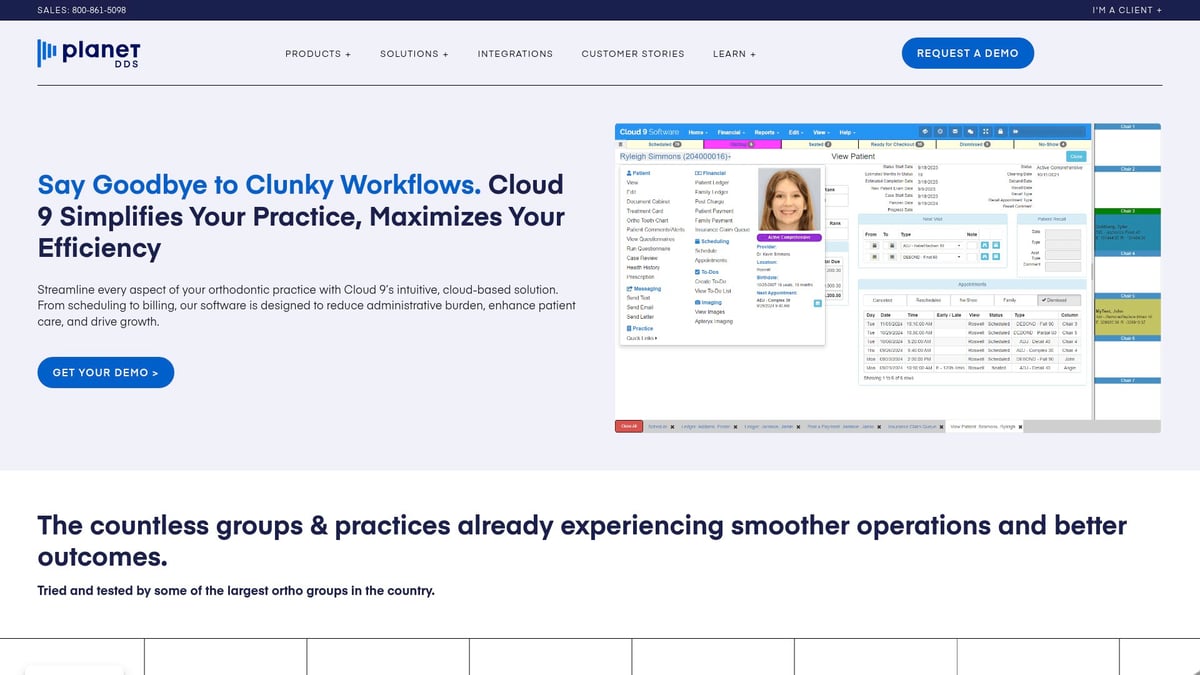
The platform’s user-friendly interface makes onboarding quick and painless. Focus Ortho’s automation of routine tasks, such as appointment reminders and billing, frees up valuable administrative time. Pricing is competitive and quoted per practice, making it attractive for those watching the bottom line.
While the software excels in core management functions, it lacks some advanced imaging features. Larger group practices may require a more robust solution, but for most small to mid-size clinics, Focus Ortho strikes the perfect balance.
Practices have reported up to a 30 percent reduction in no-shows thanks to automated reminders—a testament to the value of well-designed orthodontic practice management software.
CS OrthoTrac Cloud by Carestream Dental
CS OrthoTrac Cloud by Carestream Dental is a secure, cloud-based orthodontic practice management software that shines in integration and compliance. It features scheduling, billing, patient communication, and seamless connectivity with Carestream imaging hardware.
The subscription model varies by practice size, and the platform is especially valuable for clinics already using Carestream devices or planning a cloud migration. Key benefits include robust security, HIPAA compliance, and reliable support for imaging workflows.
OrthoTrac Cloud’s main advantages are data security and the ability to streamline daily operations. However, its full value is unlocked when paired with Carestream hardware, and it may be less flexible for practices relying on third-party integrations.
Many orthodontic clinics report smoother workflows and improved data protection after switching to OrthoTrac Cloud. For those prioritizing secure, integrated orthodontic practice management software, this platform is a top contender.
VistaDent OC by Dentsply Sirona
VistaDent OC by Dentsply Sirona is a clinically focused orthodontic practice management software known for its advanced cephalometric analysis and deep imaging integration. It caters to orthodontists who demand detailed diagnostic and treatment planning tools.
The software is typically bundled with imaging hardware, offering a seamless ecosystem for clinical and administrative tasks. VistaDent OC is ideal for practices where case presentation and outcome predictability are priorities.
Key benefits include robust cephalometric tools, reliable performance, and strong hardware integration. The custom pricing reflects the depth of features, and while it may be more than smaller practices need, it excels in advanced clinical settings.
Clinics using VistaDent OC frequently report improved case presentations and higher treatment acceptance rates, showcasing the impact of sophisticated orthodontic practice management software.
Quick Ceph Studio Orthodontic Software
Quick Ceph Studio is designed for orthodontists who prioritize fast, accurate cephalometric analysis and case presentation. This orthodontic practice management software offers both one-time license and subscription options, making it accessible for various budgets.
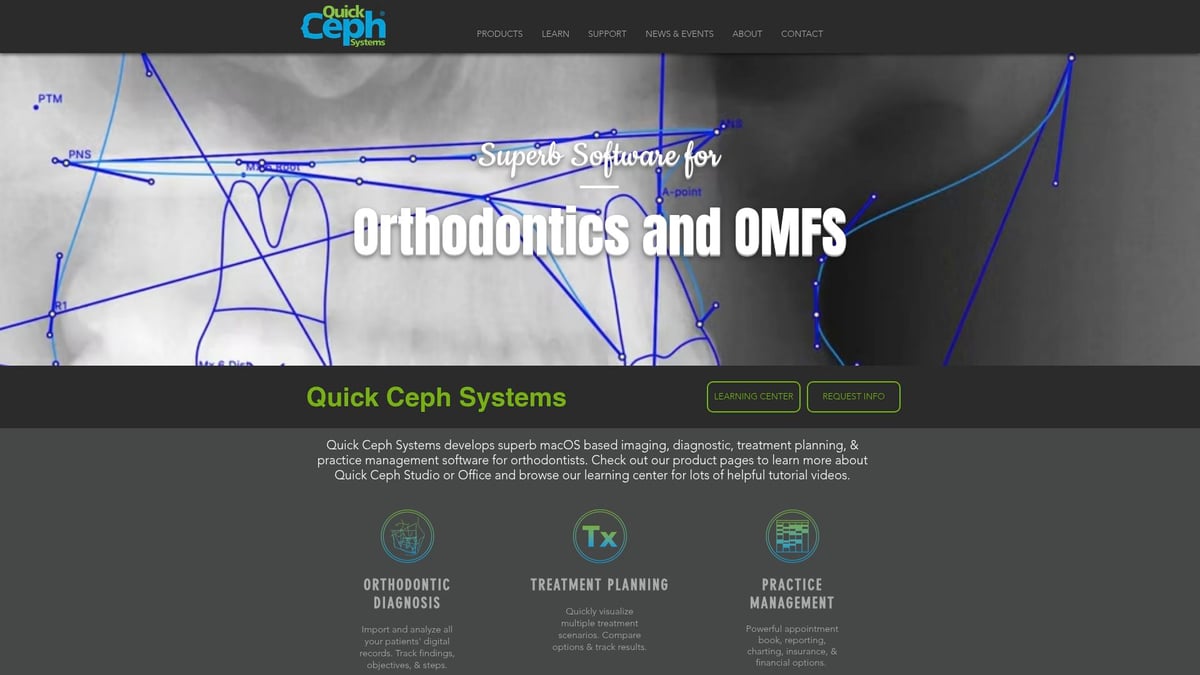
The platform specializes in cephalometric tracing, treatment simulation, and essential practice management functions. Its intuitive interface and speedy analysis set it apart for solo practitioners and clinics focused on diagnostics.
While Quick Ceph Studio excels in clinical analysis, it offers fewer management features compared to broader platforms. Many practices use it alongside other orthodontic practice management software to enhance patient education and diagnostic workflows.
Pros include affordability, ease of use, and flexible licensing. The main limitation is its narrower focus, but for clinicians needing quick, reliable cephalometric tools, Quick Ceph Studio is a smart complement.
How to Choose the Best Orthodontic Practice Management Software for Your Clinic
Selecting the right orthodontic practice management software can shape your clinic’s efficiency and patient experience for years to come. With so many options available, knowing what to prioritize is key. Let’s break down the process into four practical steps, so you can feel confident in your decision.
Assessing Your Practice’s Unique Needs
Begin by examining your clinic’s size, daily patient volume, and the complexity of your workflows. Each orthodontic practice management software solution is designed with different types of practices in mind. Think about whether you need robust imaging integration, detailed billing features, or multi-location support.
Make a checklist of must-have features such as secure patient data handling, cloud access, and customizable workflows. Consider your current systems for imaging and payments and whether your new software should integrate seamlessly with them. Evaluate your team’s comfort with technology, as user-friendly interfaces can ease the transition and minimize disruptions.
Comparing Features, Pricing, and Support
Once you understand your needs, it’s time to compare solutions side by side. Many platforms offer tools to streamline scheduling, billing, and document management. Transparent pricing is essential, so ask about potential hidden fees, add-ons, or upgrade costs.
Look for strong customer support, responsive technical help, and ongoing training resources. Evaluate how frequently the software vendor releases updates and how user feedback is incorporated. Don’t forget to assess advanced features, like patient communication and engagement tools that can help improve patient retention and satisfaction.
Planning for Implementation and Change Management
Switching to a new orthodontic practice management software requires careful preparation. Start by developing a migration plan that includes data transfer, testing, and contingency steps. Schedule comprehensive training sessions for staff to build confidence and ensure everyone is on the same page.
Set clear benchmarks for success, such as reducing administrative workload or increasing appointment confirmations. Communicate the benefits of the new system to both your team and your patients, encouraging feedback and addressing concerns as they arise. Regularly monitor adoption progress and be ready to adapt your approach as needed.
Leveraging Expert Resources for Confident Decisions
Making a final choice is easier with expert guidance. Review unbiased analysis from industry specialists and platforms that track software trends. Attending demos and participating in webinars allows you to see orthodontic practice management software in action and ask questions directly.
Consult market research, such as the Dental Practice Management Software Market Growth report, to understand where the industry is heading. Connect with peers who have firsthand experience with different platforms. These steps help you avoid common pitfalls and maximize your return on investment.